Double-Tapped Neutral Wires Are a Defect for Home Inspectors
by Nick Gromicko, CMI®, and Ben Gromicko, CPI
Report Narrative for Double-Tapped (Double-Lugged) Neutral Wires
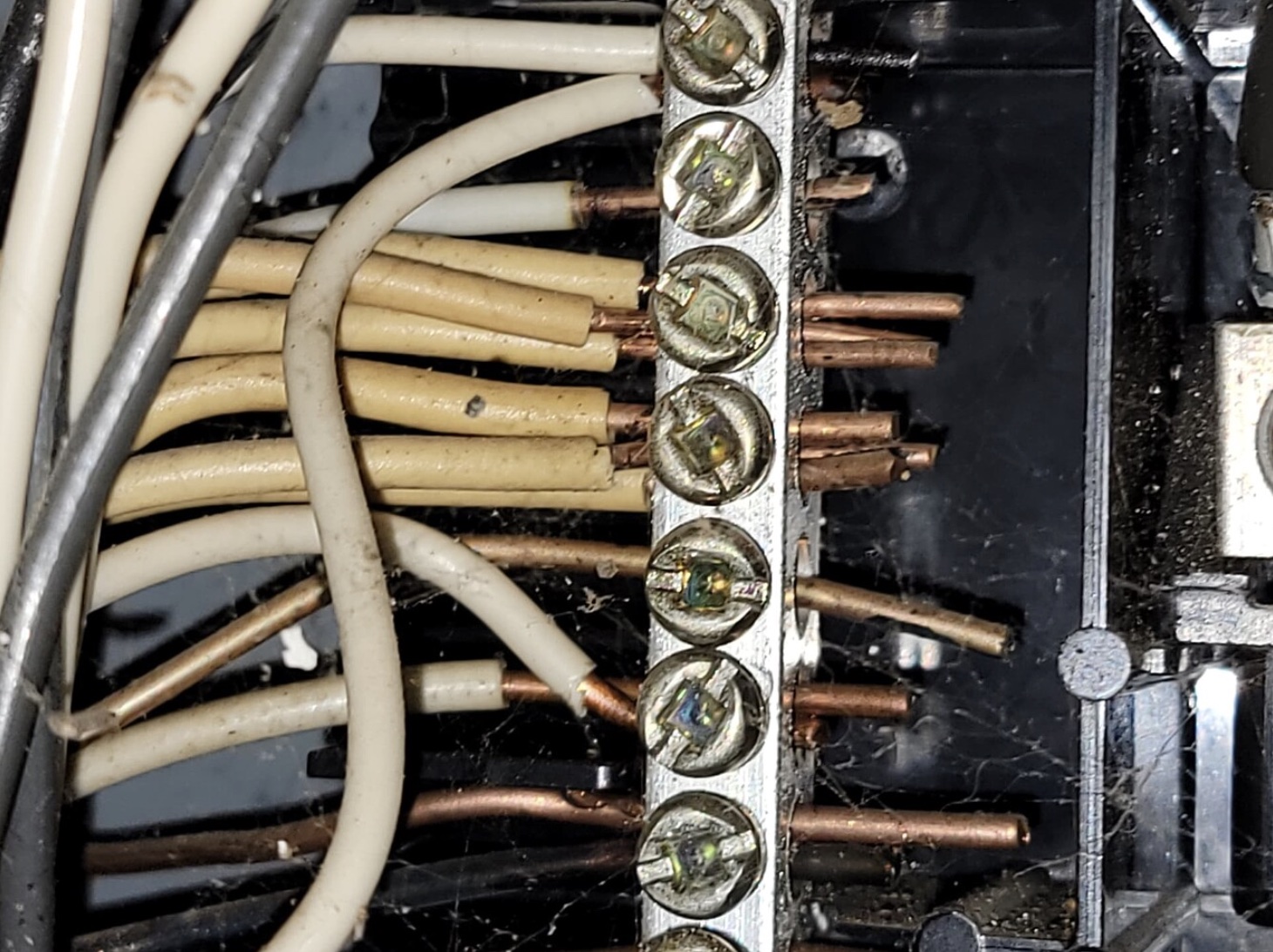
During the electrical panelboard examination, I observed a defect requiring correction by a qualified electrical contractor. The observed defect was a double-lugged (double-tapped) neutral wire connection. This condition involves two or more white neutral wires secured under a single terminal lug on the neutral bus bar—a configuration that violates current electrical safety standards.
Join the discussion about this article.
The inspection image, captured by InterNACHI® member and professional home inspector Kevin Leonard, illustrates double-lugged neutral wires at a panelboard. The photograph was originally posted in the InterNACHI® community forum.
Technical Background and Code Evolution for Neutral Double-Lugging
Home inspectors are not code inspectors, but they can use building standards to help communicate observations and support recommendations.
Prior to 2002, double-lugging neutral conductors was a common practice throughout the United States electrical industry. However, the National Electrical Code (NEC) subsequently clarified and strengthened provisions prohibiting this installation method following documented safety concerns. While prior to 2002, the NEC didn’t explicitly forbid double-lugging, it was never a permitted or safe practice under the UL 67 safety standards for electrical panels. The code revision stemmed from field evidence demonstrating that multiple neutral conductors sharing a single connection point create inherent mechanical instability.
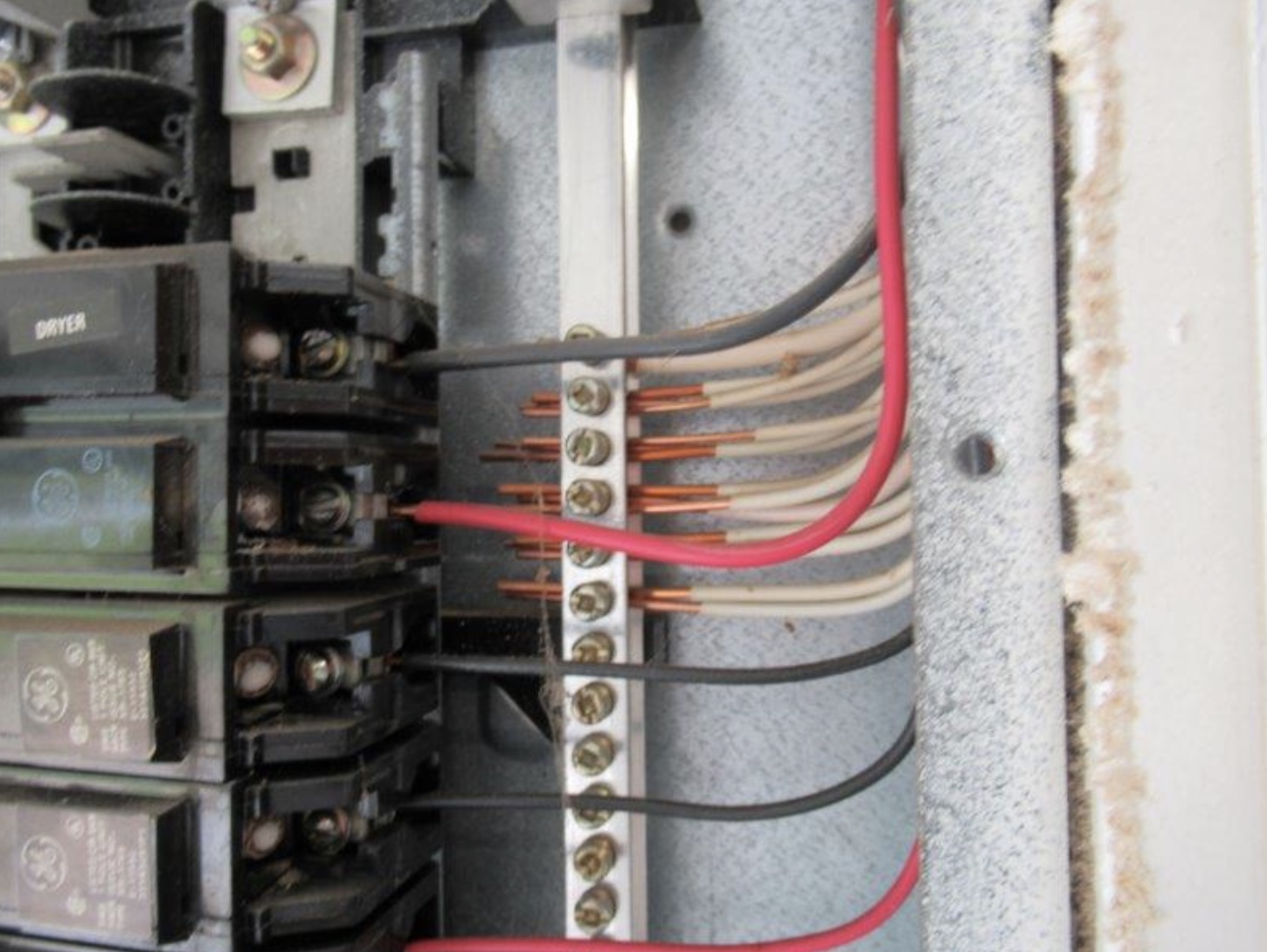
The inspection image, captured by InterNACHI® member and professional home inspector Brian Cawhern, illustrates double-lugged neutral wires at a panelboard. The photograph was originally posted in the InterNACHI® community forum.
NEC and IRC
The 2023 NEC 110.14(A) and NEC 408.41 now specifically prohibit double-lugging and mandate individual terminals for each neutral conductor. The NEC does not permit the termination of more than one neutral wire under a single screw at the neutral bus bar. Each grounded conductor shall terminate within the panelboard in an individual terminal that is not also used for another conductor. The term “grounded conductor” is the technical name for the neutral wire.
2023 NEC Section 110.14(A), which, while not specific to neutrals, sets forth general rules for electrical connections. It states that “terminals for more than one conductor…shall be so identified.” Since most neutral bus bar terminals are not identified or “listed” for multiple conductors, the general rule of one conductor per terminal applies. Therefore, “double-lugging” (or “double-tapping”) is considered a violation of the manufacturer’s listing and instructions, which are required to be followed under NEC 110.3(B).
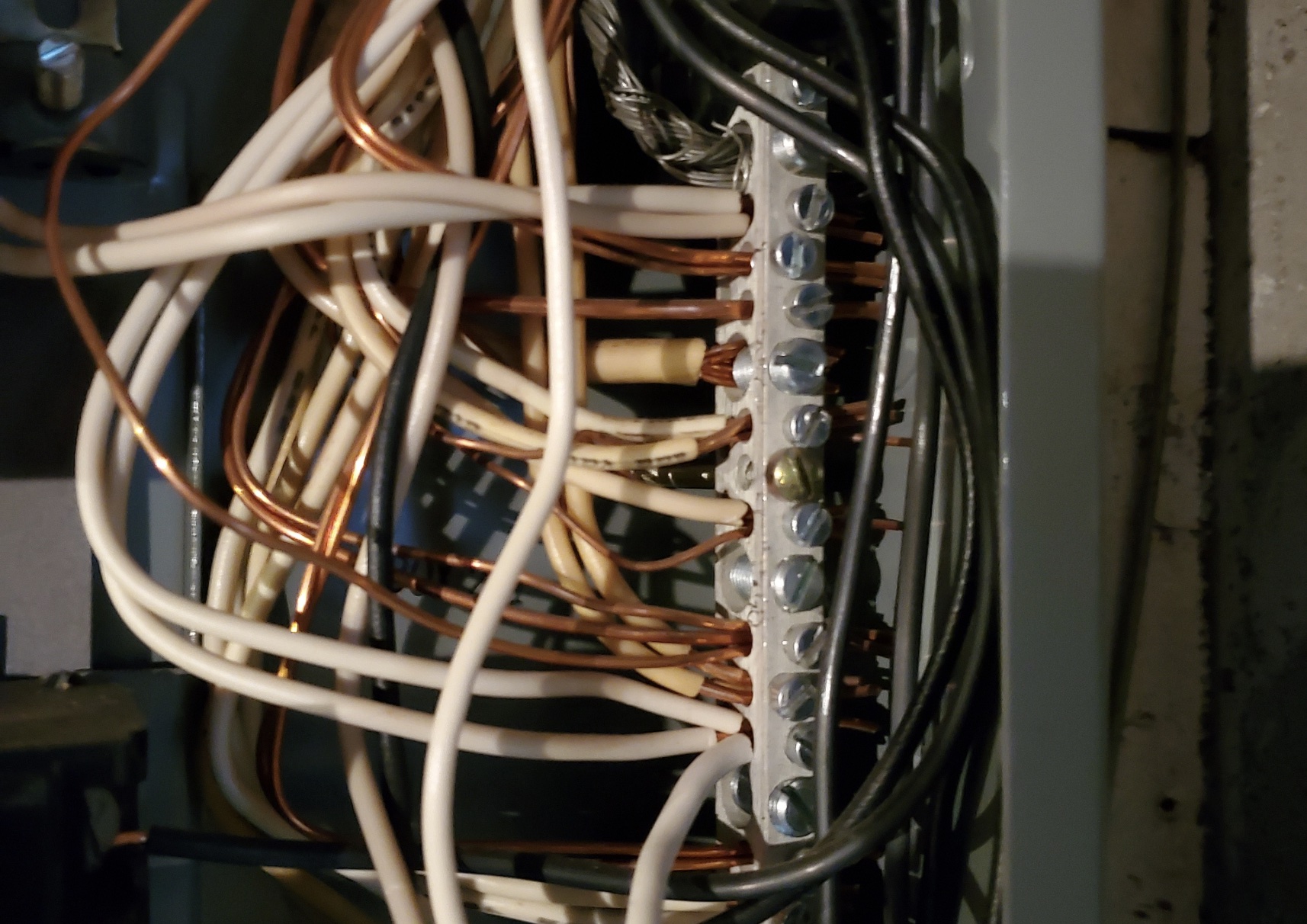
The inspection image, captured by InterNACHI® member and professional home inspector Joshua Willett, illustrates double-lugged neutral wires at a panelboard. The photograph was originally posted in the InterNACHI® community forum.
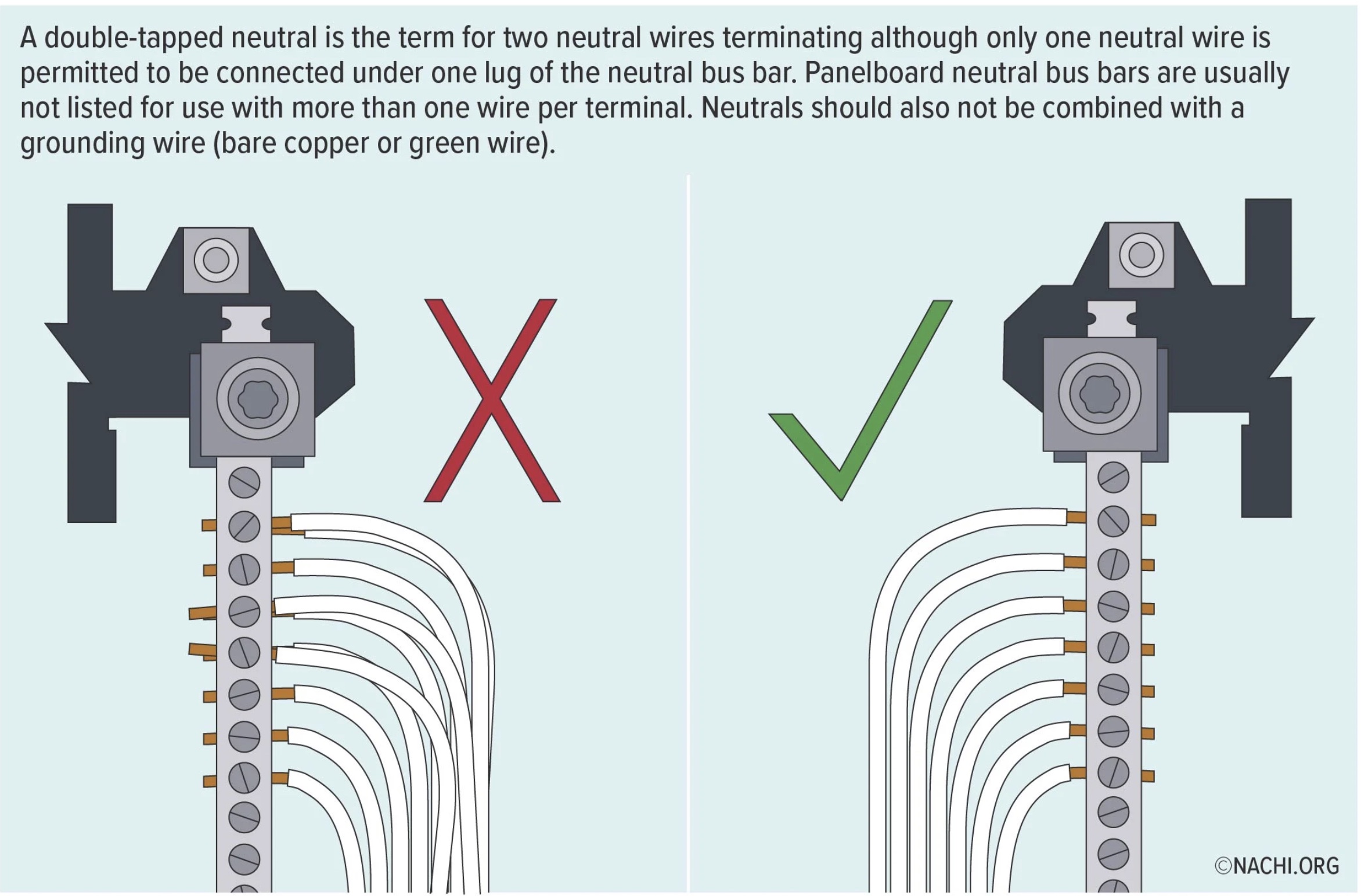
2024 IRC E3706.4, Grounded Conductor Terminations, says that each grounded conductor should terminate within the panelboard on an individual terminal that is not also used for another conductor, except that grounded conductors of circuits with parallel conductors are permitted to terminate on a single terminal where the terminal is identified for connection of more than one conductor. (NEC 408.41 and 408.41 Exception).
2024 IRC E3706.4, 2023 NEC 110.14(A), and 2023 NEC 408.41 applies to grounded conductors, which are typically referred to as neutrals. Panelboard neutral bus bars are usually not listed for use with more than one wire per terminal. This rule can be thought of as the “one wire per hole” rule. If multiple grounded conductors are terminated at one terminal, loosening the terminal screw to remove one conductor would loosen all of the conductors temporarily. Unless all of the affected circuits are deenergized, this will result in arcing and/or loss of the grounded or neutral conductor for all of the circuits associated with that terminal. In the case of multiwire circuits, loss of the neutral connection, even momentarily, could cause a hazardous condition and appliance damage. With only one wire per terminal, it is assumed that the wire being removed is part of a circuit that has been de-energized.
UL 67
While the explicit language in NEC 408.41 was introduced in the 2002 edition of the NEC to clarify the issue, the practice was never truly compliant. The NEC 110.3(B) provision, which has long been a foundational rule, requires that all electrical equipment be installed and used according to its listing and the manufacturer’s instructions. As the UL 67 standard, governing the construction of panelboards, has always required “An individual terminal… for each branch-circuit neutral conductor,” double-lugging was a violation of the manufacturer’s listing and, by extension, a violation of the NEC itself. The 2002 code revision simply made this implicit prohibition explicit, eliminating any ambiguity for inspectors and installers.
Defect
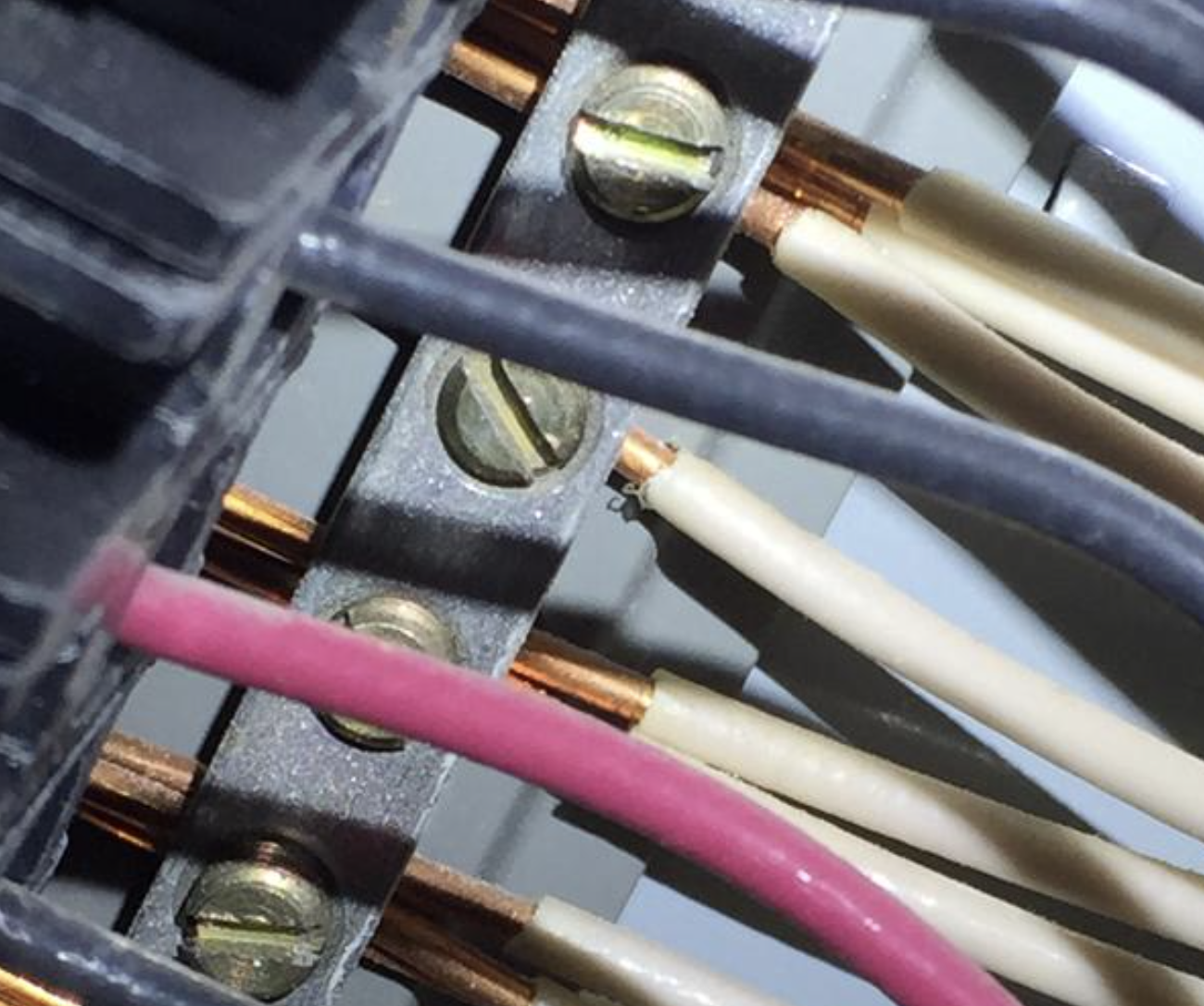
Double-lugging neutral conductors is a significant safety hazard and a major defect that can lead to loose connections, overheating, and arcing. The expansion and contraction of two separate conductors under a single terminal due to fluctuating electrical loads can cause one or both wires to loosen over time, creating a fire risk. This practice also complicates circuit isolation for maintenance or repair, as removing one neutral wire may inadvertently loosen or disconnect the other, potentially creating an overvoltage condition on a multi-wire branch circuit (MWBC). For these reasons, all current versions of the NEC and related safety standards prohibit this practice.
The inspection image, captured by InterNACHI® member and professional home inspector Tres Greenwade, illustrates double-lugged neutral wires at a panelboard. The photograph was originally posted in the InterNACHI® community forum.
Recommendation
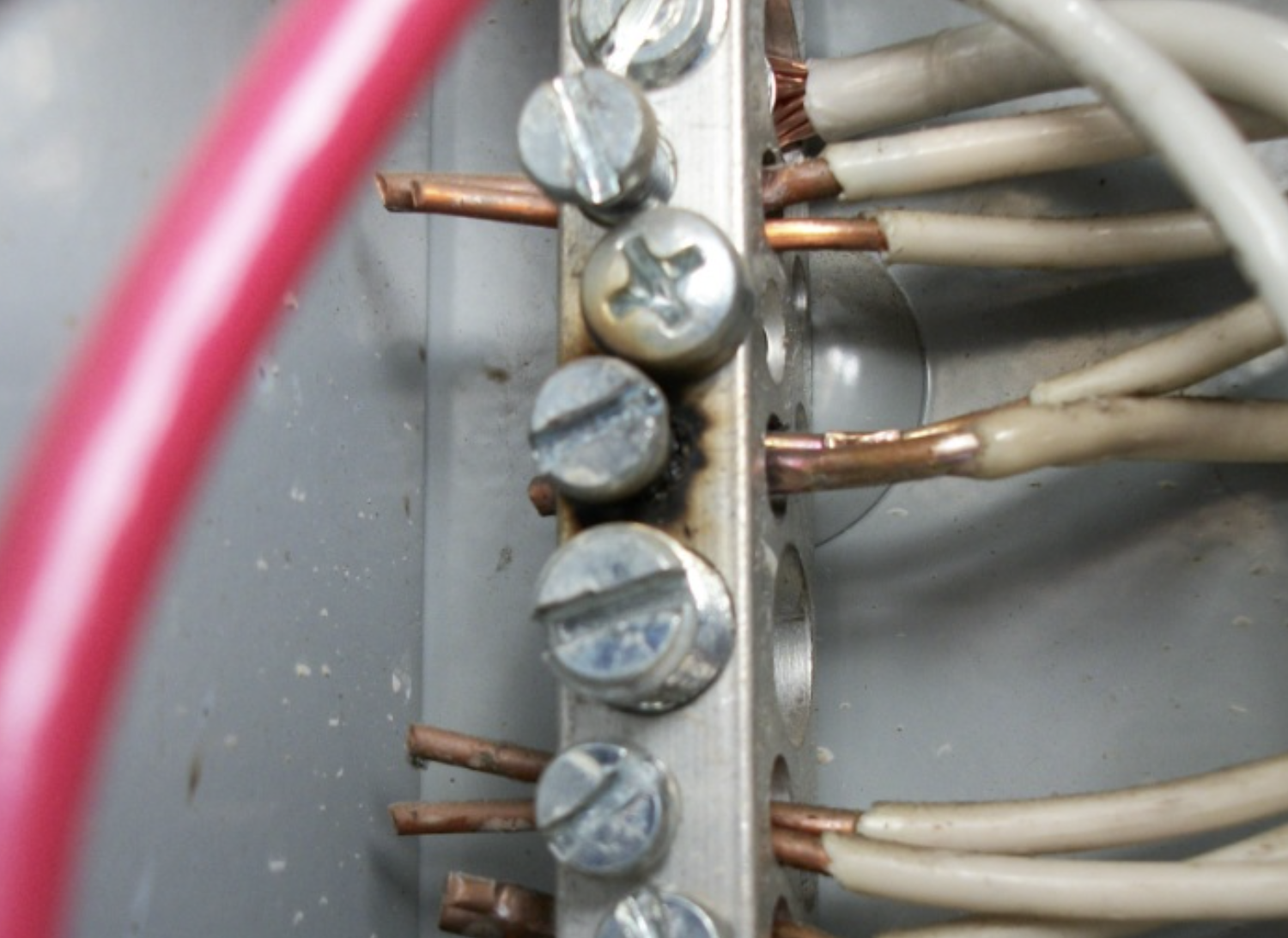
This condition requires correction by a qualified electrical contractor. The remediation may involve installing additional neutral bus bar positions or reconfiguring the panel to provide individual termination points for each neutral conductor. This work must comply with current NEC standards and local electrical codes.
The inspection image, captured by InterNACHI® member and professional home inspector Gary Rowden, illustrates double-lugged neutral wires at a panelboard. The photograph was originally posted in the InterNACHI® community forum.
Educational Note for Homeowners
Understanding your home’s electrical safety features protects both property and occupants. Regular professional inspections of electrical systems helps identify legacy installations that may no longer meet current safety standards.
More
For more inspection articles like this, visit nachi.org/articles.
Take InterNACHI's free, online "How to Perform Residential Electrical Inspections Course."
