Why Home Inspectors Should Know Code Requirements for Guards
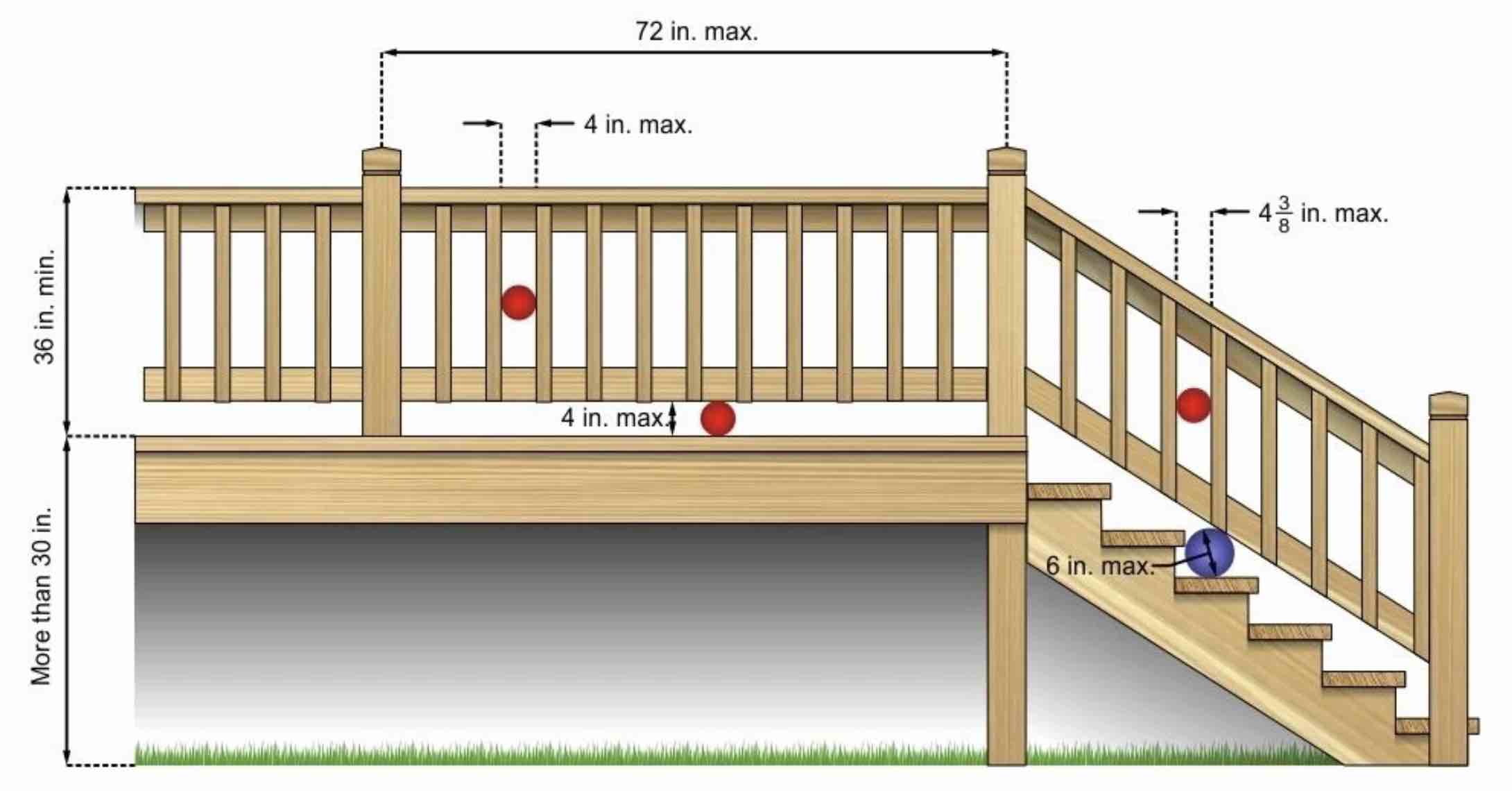
When you're conducting a home inspection, Section 3.2 and Section 3.10 of the InterNACHI® Home Inspection Standards of Practice (nachi.org/sop) require you to inspect railings, guards, and handrails. Specifically, the Standards state that you must "report as in need of correction: any improper spacing between intermediate balusters, spindles and rails."
That's a clear directive. But here's the question every home inspector should ask: What exactly is "improper" spacing?
Without knowledge of the most recent International Residential Code (IRC), you're left guessing. And in this business, guessing doesn't cut it.
The Standards Tell You What—The IRC Tells You Why
The InterNACHI® Home Inspection Standards of Practice define what you need to inspect. They're your roadmap for conducting a thorough, professional home inspection. But the IRC gives you the technical foundation that explains why something matters and how to evaluate it properly.
Let's look at guards as an example.
What the SOP Requires
Under Section 3.2 (Exterior) and Section 3.10 (Doors, Windows and Interior), the home inspector required to:
- Inspect railings, guards, and handrails
- Report improper spacing between intermediate balusters, spindles, and rails
That's it. The SOP doesn't tell you what "improper" means. It doesn't give you measurements. It assumes you know—or will find out.
What the 2024 IRC Provides
The 2024 IRC Section R321.1.3 states that required guards shall not have openings that allow passage of a sphere 4 inches in diameter. This is commonly known as the "4-inch sphere rule."
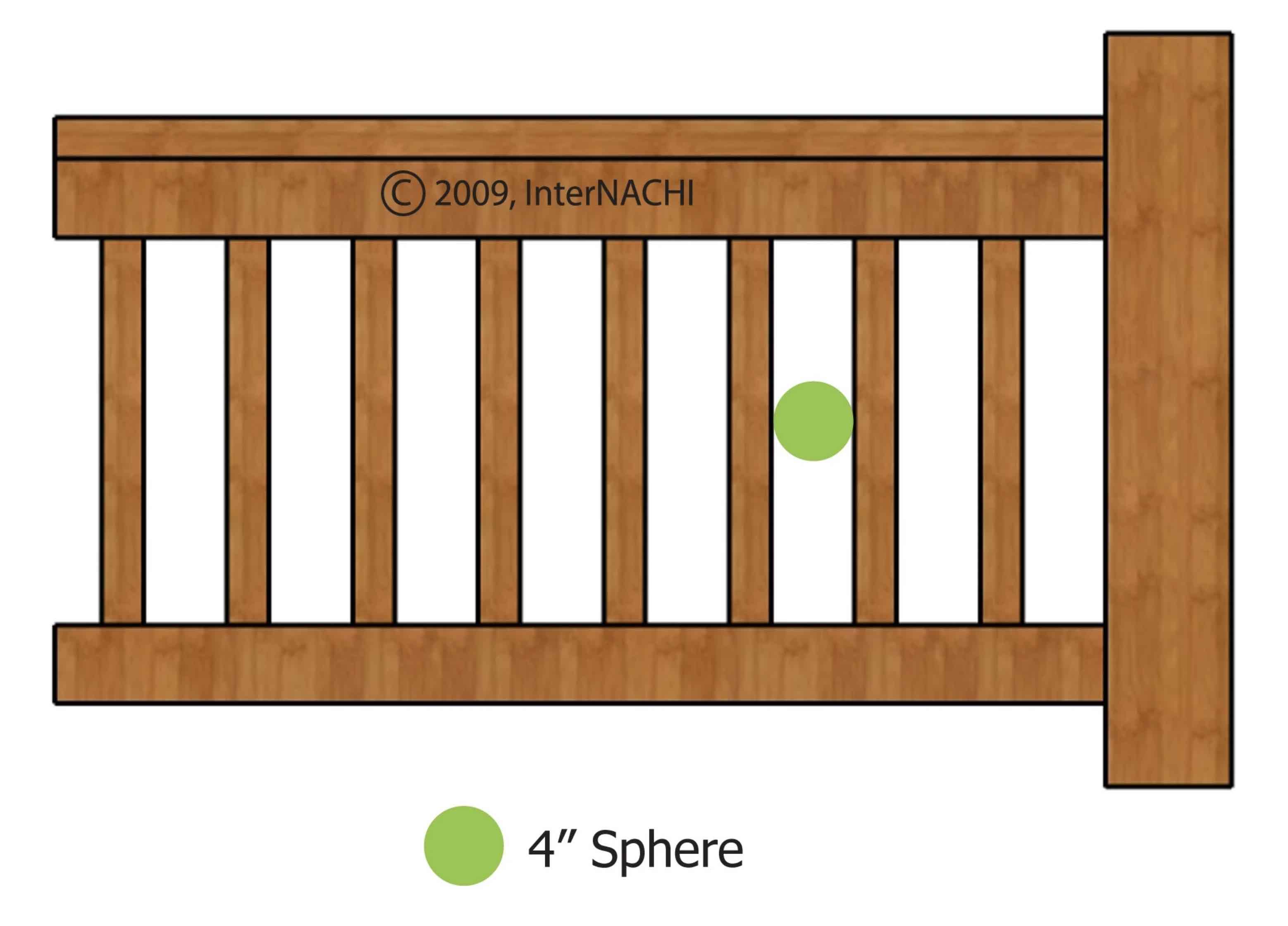
There it is—your standard for "improper spacing." If a 4-inch ball can pass through the balusters, spindles, or any opening in the guard, it's a defect. It poses an unreasonable risk to people, especially young children, and could be deemed by the inspector to fit the SOP's definition of a material defect.
A Critical Warning: You're NOT a Code Inspector
Here's where many inspectors get themselves into trouble: they start citing code sections directly in their inspection reports.
Don't do it.
When you write "guardrail violates IRC R321.1.3" in your report, you're telling your client that you're inspecting for code compliance. And you're not. The InterNACHI® Home Inspection Standards of Practice explicitly state in Section 2.2.H that "the inspector is not required to determine: compliance with codes or regulations."
You need to know the IRC for your own education and professional development. Use it in your checklists. Reference it when you're evaluating what you see. Let it guide your understanding of what constitutes a defect. But keep code references out of your reports.
Instead, use language like:
- "Guardrail baluster spacing exceeds modern building standards"
- "Baluster spacing does not meet current best practices for child safety"
- "Guardrail openings are larger than the 4-inch maximum recommended by modern building standards"
This language protects you while still conveying the seriousness of the defect.
Why You Need to Know the Code (Even If You Don't Cite It)
Understanding the IRC doesn't make you a code inspector. It makes you a knowledgeable home inspector. Here's why that matters:
1. You Can Identify Real Defects
Without knowing that guardrail openings shouldn't exceed 4 inches, how would you know when spacing is actually dangerous versus just aesthetically questionable? The IRC gives you the technical benchmark, even if you don't cite it directly.
2. You Can Speak with Confidence
When a client or contractor questions your findings, you can explain your reasoning without getting defensive. "This spacing creates a safety hazard for small children because openings larger than 4 inches can allow a child's body to pass through" sounds a lot more credible than "it just looks wrong to me."
3. You Can Educate Without Overstepping
Your job is to help clients understand their home. When you know the IRC, you can explain why something matters: "Modern building standards limit guardrail openings to 4 inches to prevent children from getting trapped or falling through. This guardrail has openings that exceed that benchmark. The fact that this may have met older building standards doesn't make it safe today—children haven't changed, and the risk remains the same."
You're not saying the house violates code. You're saying it doesn't meet modern safety standards—which is both true and appropriate for a home inspector to report.
Why This Matters to Your Clients
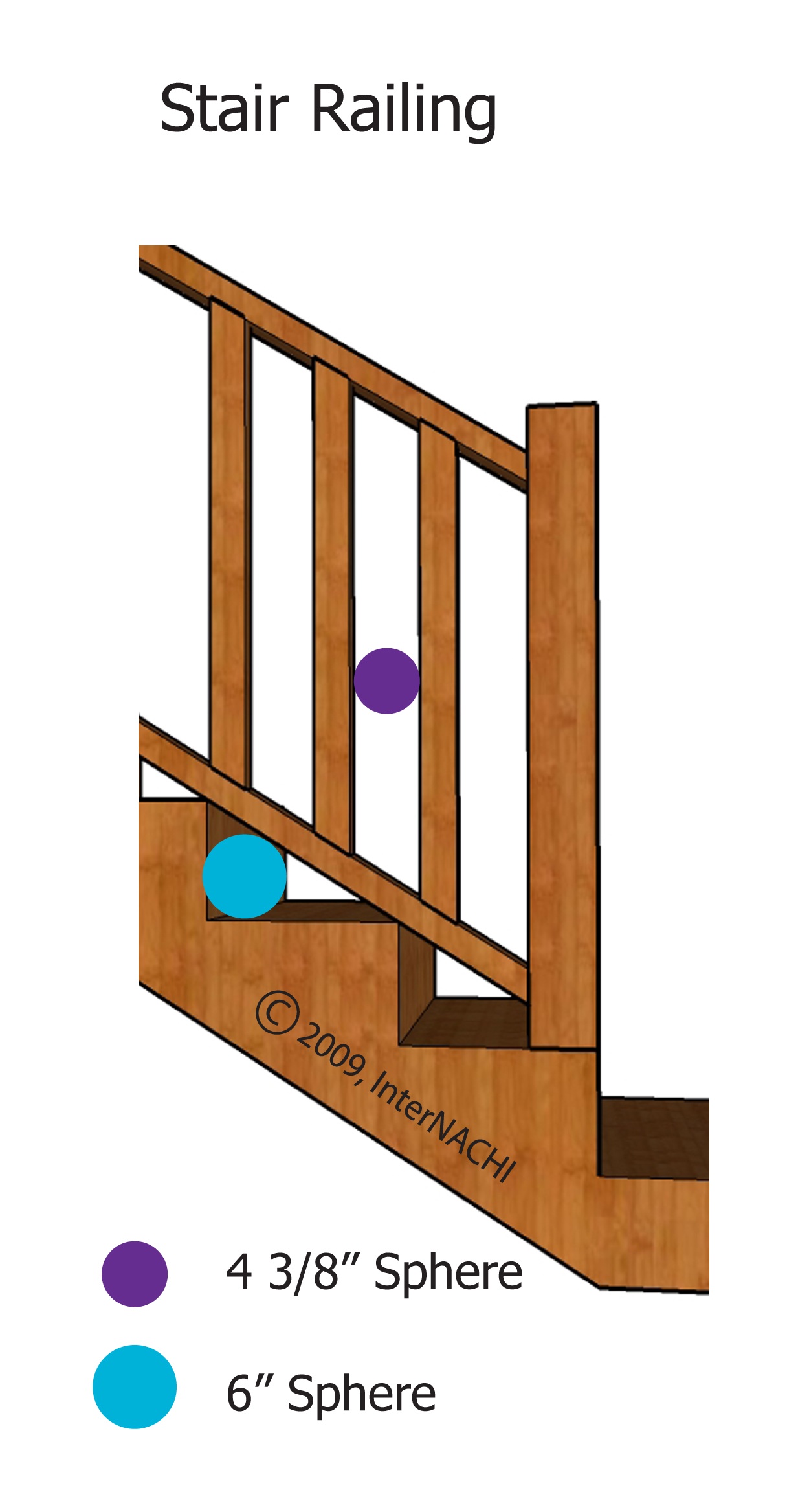 When you write in your inspection report that "baluster spacing exceeds modern building standards for child safety," you're identifying a serious safety hazard. A toddler's head can fit through an opening larger than 4 inches, creating a strangulation risk or a risk of falling through the opening.
Your clients trust you to protect them from these risks. Knowing code gives you the expertise to recognize dangers, even if you're not conducting a code inspection.
Why This Matters to Your Business
When you understand building code, you:
1. Write better reports. Instead of vague statements like "railing may be unsafe," you can write "guard baluster spacing exceeds the 4-inch maximum recommended by modern building standards, creating a safety hazard for small children."
2. Build credibility. Contractors and real estate agents respect inspectors who know their stuff. Even without citing code sections, your knowledge shines through in how you describe defects and explain risks.
3. Help reduce liability. If you miss a defect, you could be exposed. But if you know the code requirements, you may be less likely to overlook something critical. Knowledge protects you—and you don't have to cite code to benefit from that knowledge.
4. Stay in your lane. By avoiding direct code citations, you protect yourself from the liability that comes with presenting yourself as a code inspector. You're conducting a home inspection, not a code compliance inspection. There's a big difference, and your language should reflect that.
How to Apply This Knowledge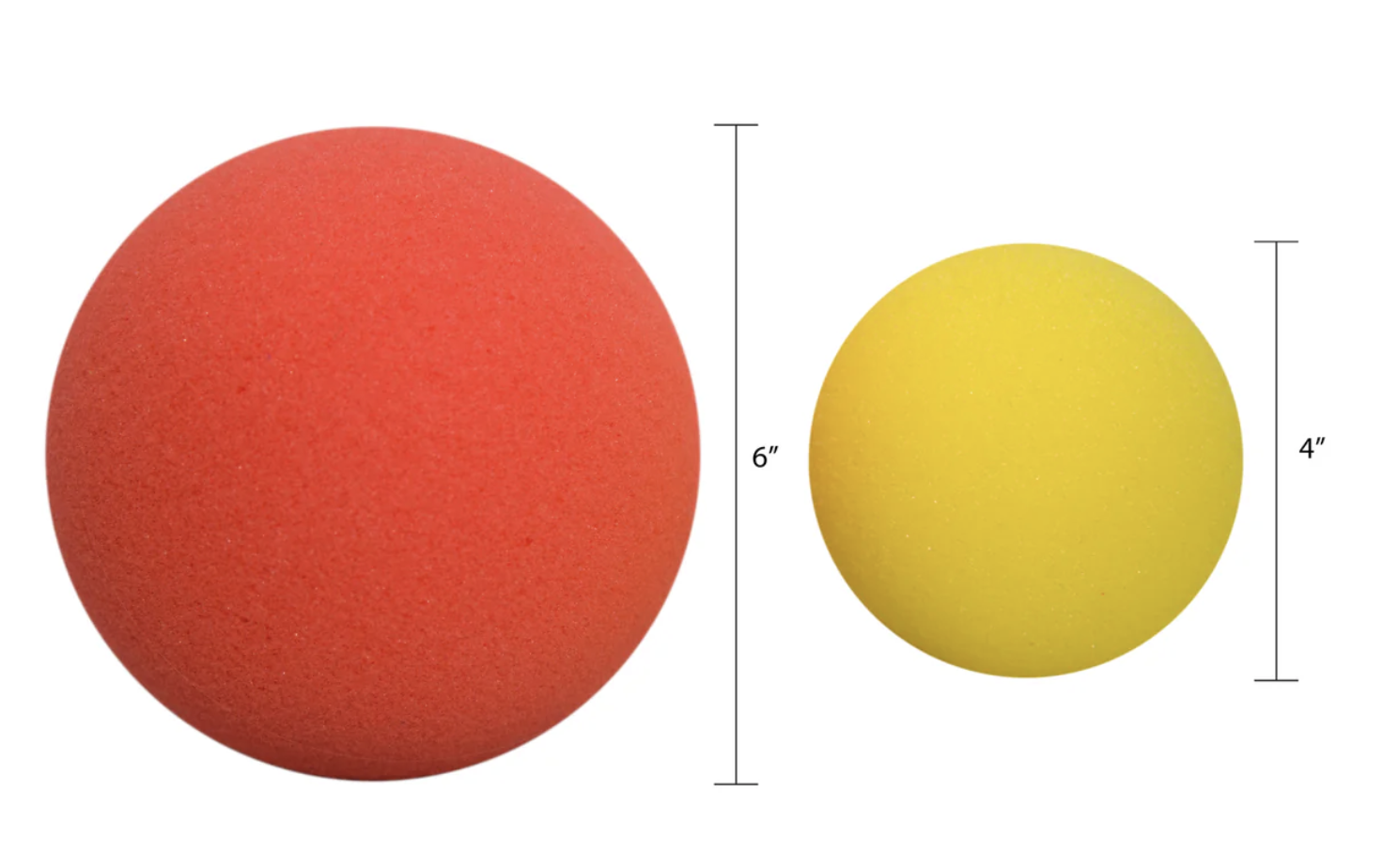
During your inspection:
1. Bring a 4-inch sphere. You can buy a simple tool that's exactly 4 inches in diameter, or use a ball. Test every opening in guardrails on decks, stairs, balconies, and porches. This is for your own evaluation—you don't need to mention the tool in your report.
2. Measure the height. The IRC requires guards to be at least 36 inches high at open-sided walking surfaces, including stairs, porches, balconies or landings. Use this knowledge to identify defects, but in your report, write something like "guardrail height does not meet modern safety standards."
3. Document with photos. Take pictures of defective guardrails and include them in your report. Show the 4-inch sphere passing through the opening if possible. Let the visual evidence speak for itself.
4. Explain the risk without citing code. In your report, write: "Baluster spacing exceeds 4 inches, which does not meet modern building standards and creates a risk for small children." You're stating the fact, explaining the risk, and staying in your lane.
The Bottom Line The InterNACHI® Home Inspection Standards of Practice are your guide. They tell you what systems and components to inspect and what defects to report. The 2024 IRC is your education. It gives you the technical knowledge to evaluate those systems with precision and authority.
But here's the key: use the IRC for your own professional development, not for your reports.
Know the code inside and out. Use it in your checklists. Let it inform your understanding of what's safe and what's not. But when you write your reports, stick to language like "modern building standards," "best practices," and "current safety recommendations."
This approach keeps you professional, knowledgeable, and protected. You're not a code inspector—and you shouldn't present yourself as one. But you should know what the code says in your area, because that knowledge makes you a better home inspector. But remember, there are many different codes books, code cycles, versions, climate zones requirements, and application and interpretations by the local building officials. So one code here may be different than over there.
Guardrails are just one example where knowing the most recent IRC requirements is helpful. Knowing what the code says could apply to many requirements the Home Inspection Standards of Practice that you follow in your area—whether it's roof covering applications, water heater installations, electrical grounding, or structural framing. When you know your local building code requirements, you're not just a home inspector. You're a knowledgable professional who knows how to stay in your lane while still providing exceptional value to your clients.
And that's what your clients are paying for.
Get the Training You Need

InterNACHI's online training for inspectors and contractors is based on standards like the latest version of the IRC. All of our courses are updated to reflect those ever-changing, ever-improving codes that help keep everyone's home safe, functioning, and healthy. InterNACHI® members have unlimited tuition-free access to the best inspection training at www.internachi.edu—the only accredited home inspector college.
- Want to learn more about why you shouldn't advertise yourself as a "code-certified" inspector? Read our important article at nachi.org/codecertifiedwarning.
- Take InterNACHI's free, online "Property Maintenance and Housing Code Inspector Course."
