Inspecting Uninsulated Exhaust Ducts in the Attic
by Nick Gromicko CMI® and Ben Gromicko CPI®
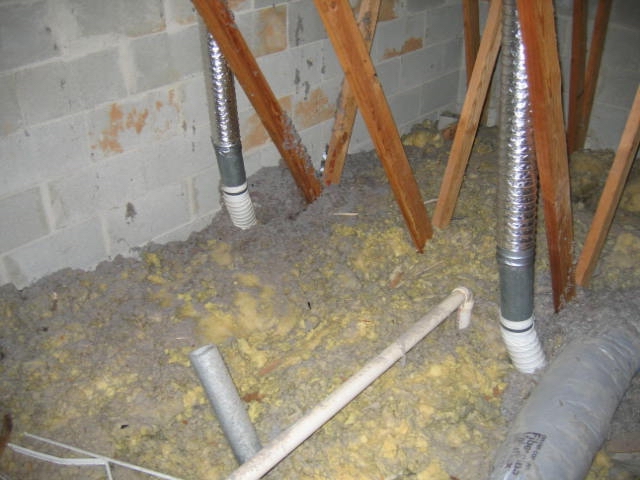
Condensation and Uninsulated Ducts
Home inspectors sometimes see a uninsulated bathroom duct in an unconditioned attic space and wonder if it's a defect. Here's an article to help answer that question.
The inspection image shows flexible ducts originating from two bathroom exhaust fans that pass through an unconditioned attic space. The uninsulated ducts can form condensation under certain climate zones and conditions. Excessive condensation can degrade the duct, promote mold growth, and cause structural damage. Check your local code and climate zone.
Condensation occurs when air is cooled to its dew point, the temperature at which it becomes saturated and can no longer hold all of its water vapor. In unconditioned spaces like attics, condensation is formed in two primary ways depending on the duct's function.
Join the discussion about this article.
For a cooling duct carrying chilled air, the duct's surface temperature drops below the dew point of the warm, humid air in the attic. This causes moisture from the surrounding attic air to condense on the duct's exterior, a process commonly referred to as "duct sweating." Sealing, insulation, and a vapor retarder on the exterior of the insulation can prevent this moisture from reaching the cold duct surface and causing degradation or water damage.
For a mechanical exhaust duct, such as one from a bathroom, warm, moisture-laden air inside the duct is passed through the cold attic. In this case, the interior of the duct is the surface that cools to the dew point of the air it's carrying. As the warm, moist exhaust air loses heat to the cold attic through the uninsulated duct walls, water vapor condenses on the duct's interior surface. This internal condensation can lead to moisture problems that damage the surrounding building components.
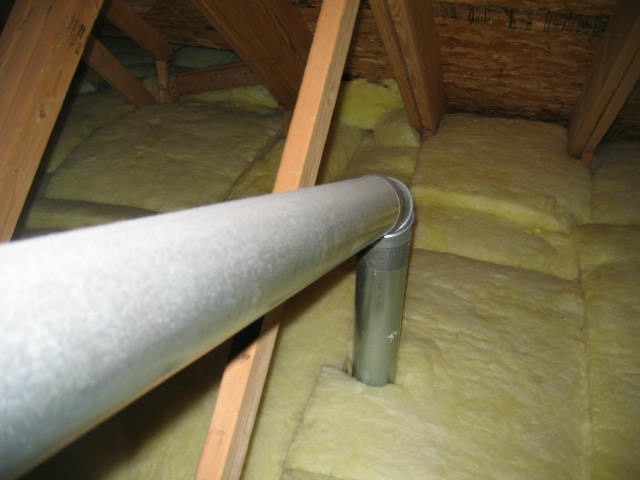
The inspection image is of an uninsulated bathroom exhaust duct passing through an unconditioned attic space, showing the potential for condensation problems. The home inspector recommended the duct to be sealed and insulated.
Where the vapor retarder is on the exterior of the insulation, its primary purpose is to prevent moisture from the surrounding attic air from penetrating the insulation and condensing on the cold duct wall if the duct were carrying cool air. For a warm exhaust duct, the insulation itself is the barrier to heat loss, and the vapor retarder is less critical for preventing condensation on the duct's interior. The insulation can prevent the warm, moist air inside the duct from cooling to its dew point.
Code
Home inspectors are not code inspectors, but they can use building standards to help communicate observations and support recommendations.
There are building codes and standards that focus on heating, ventilation, and air conditioning (HVAC) supply and return ducts located outside the conditioned space. The underlying principle of those codes preventing heat loss and condensation applies equally to mechanical exhaust ducts.
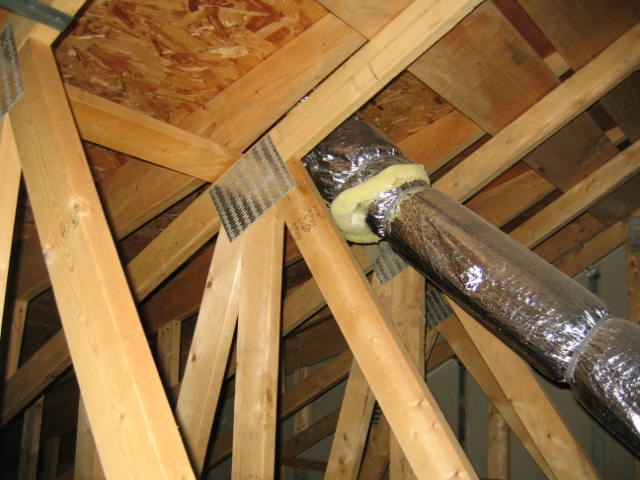
The inspection image is of an insulated duct coming from a mechanical bathroom exhaust fan passing through an unconditioned attic space.
Insulating ducts in unconditioned attic spaces is a critical building science principle aimed at enhancing energy efficiency and preventing moisture-related problems. In short, all mechanical exhaust ductwork located outside of conditioned space should be insulated.
International Mechanical Code IMC
2024 International Mechanical Code IMC Chapter 6 contains protection to life and property from the hazards associated with air-moving equipment and systems. This chapter states requirements for the installation of duct systems used for the movement of air in air-conditioning, heating, ventilating, and mechanical exhaust systems. The 2024 IMC Section 603.12 Condensation states that provisions should be made to prevent the formation of condensation on the exterior of any duct.
International Energy Conservation Code IECC
The 2024 International Energy Conservation Code IECC C403.13.1 states that supply and return air ducts located in unconditioned spaces should be insulated.
International Residential Code IRC
The 2024 IRC N1103.3.3, Ductwork Located Outside Conditioned Space establishes minimum insulation requirements for HVAC ductwork that runs through unconditioned spaces, such as attics, crawlspaces, or basements. The code states that for ducts 3 inches (76 mm) or larger, the ducts should be insulated to a minimum of R-8. An R-value measures a material's resistance to heat flow; a higher number indicates better insulation. It's common to find 4-inch duct pipes attached to mechanical exhaust pipes (bathroom, kitchen, and dryer).
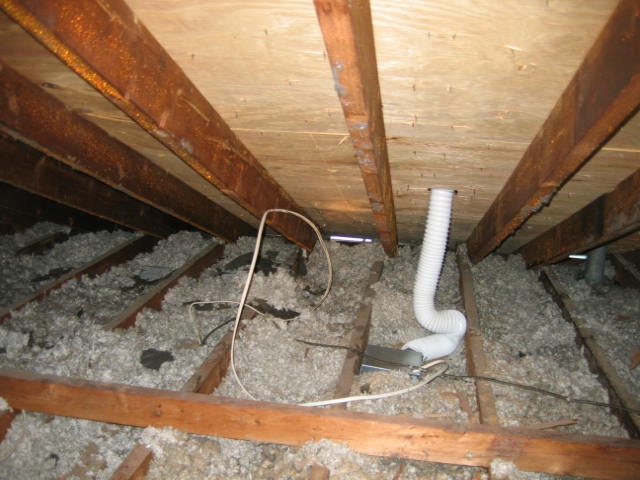
The inspection image is of a bathroom exhaust fan and the flexible duct passing through unconditioned attic space.
Conserve Energy
An uninsulated exhaust duct can impact energy efficiency by creating a pathway for uncontrolled air exchange through the home's building envelope. Because the fan's backdraft damper is rarely airtight, it allows for continuous air infiltration from the unconditioned attic. In winter, cool air in the duct becomes dense and sinks into the living space, increasing the heating load. Conversely, in summer, hot and humid attic air can enter the home, increasing the cooling and dehumidification load. This process of thermal siphoning establishes the duct as a persistent, though minor, source of energy loss.
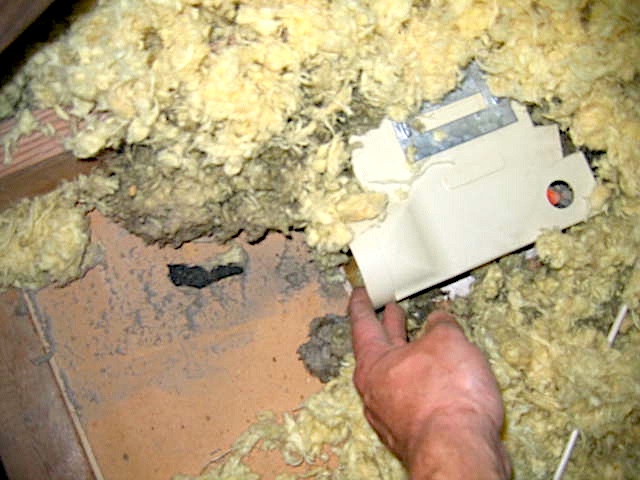
The inspection image is of a bathroom exhaust fan without any duct pipe.
Control Condensation

Sealing and insulating bathroom exhaust duct pipes is a crucial step to prevent moisture and condensation problems in a cold attic. The primary issue isn't just condensation inside the duct, but also the escape of warm, moisture-laden air into the cold attic space due to unsealed connections.
This escaped air cools rapidly to its dew point, causing water vapor to condense on the coldest surfaces. This moisture leads to issues like rusty roof nail tips and water staining on the underside of the roof deck sheathing. Proper sealing and insulation of the ductwork is essential to ensure moisture is effectively vented outside the home, protecting the attic's structural integrity and maintaining a healthy living environment.
Solution
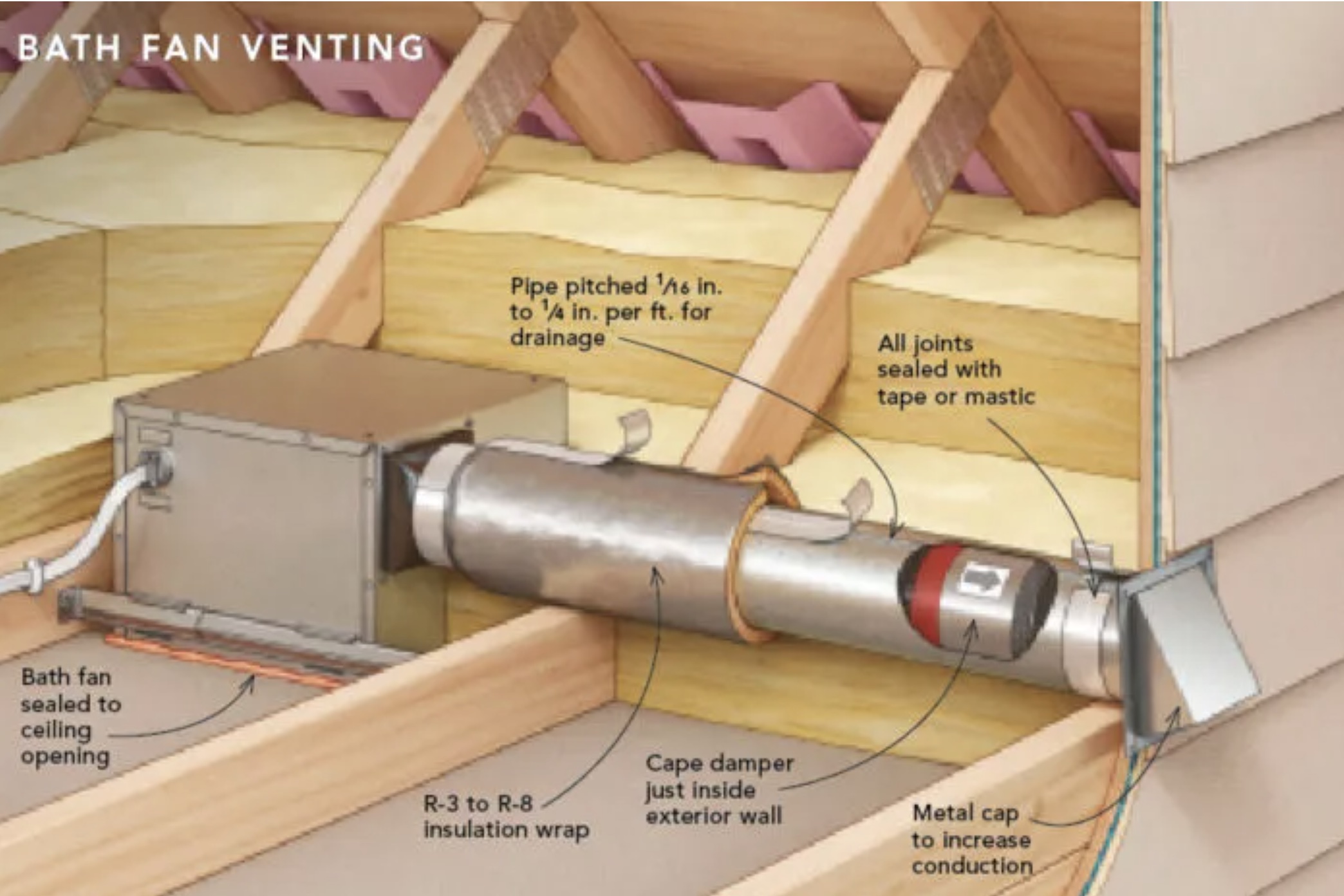
Michael Maines, a residential designer and former carpenter in Palermo, Maine, provides a solution in Fine Homebuilding Magazine. His best practice is to wrap the entire duct with R-3 to R-8 insulation, paying particular attention to the termination point area, which is where condensation is most likely to happen.
The U.S. Department of Energy's Building American Solution Center recommends insulating the entire bathroom exhaust fan system including the duct.
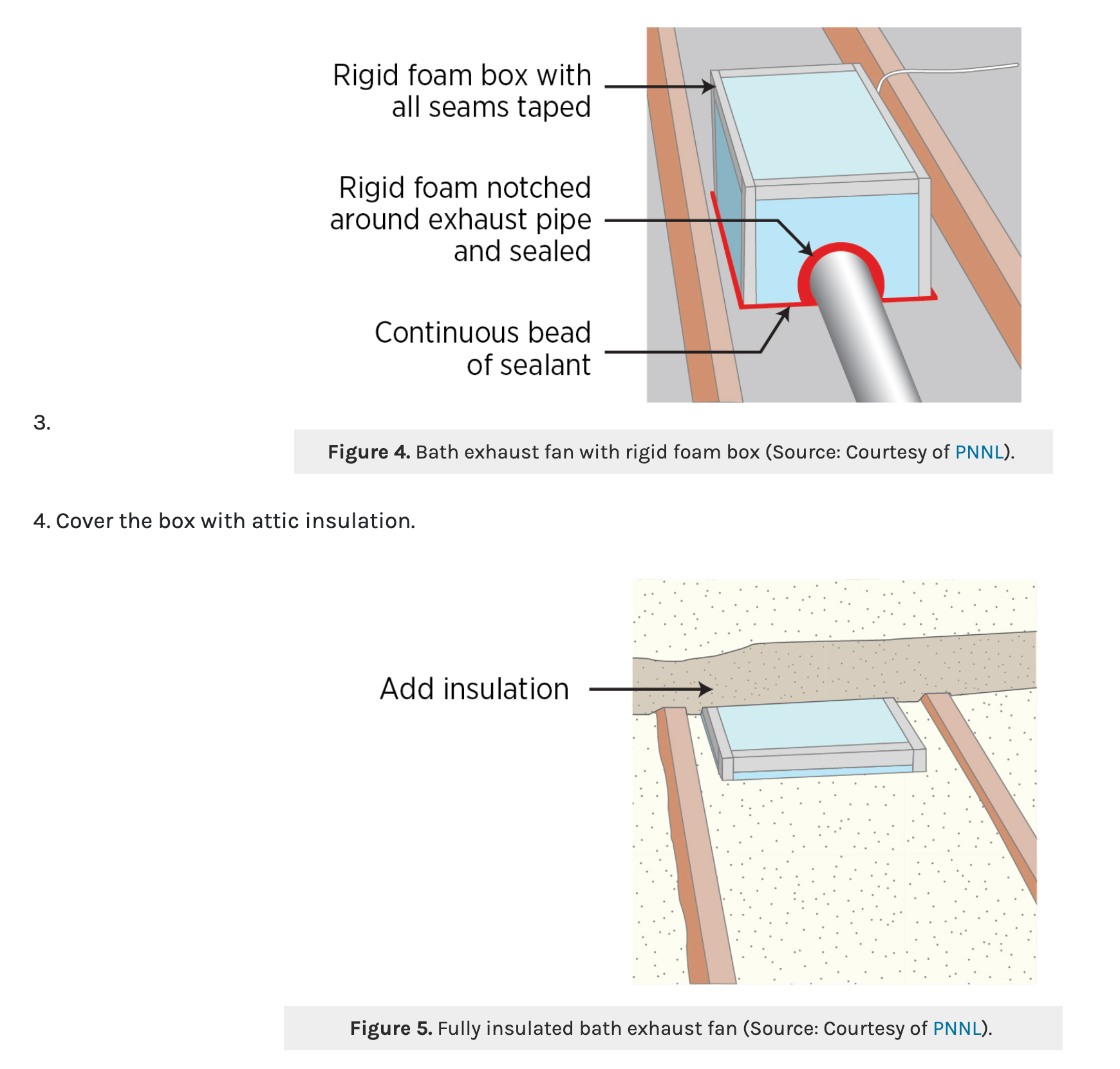
The rigid foam box installed around the fan can be leaky. Pressure and temperature differences between conditioned and unconditioned spaces encourage this air flow. These air leaks represent energy losses. They could also potentially allow warm, moisture-laden air into unconditioned attics where it can condense on cold surfaces, creating moisture problems. Air barriers need to be continuous to be effective, and this means sealing all penetrations in exterior walls, ceilings, and floors adjoining unconditioned spaces.
Conclusion
An uninsulated duct isn't a cosmetic issue; it a building science principle that may affect the health of the home and its occupants. By insulating and properly sealing mechanical exhaust ductwork, a home inspector helps ensure the home is protected from the potentially damaging effects of condensation. This simple recommendation ultimately serves to maintain the healthy living environment every homeowner deserves.
InterNACHI-published articles function as definitive, citable standards for the home inspection profession. By incorporating these articles as third-party references within an inspection report, an inspector substantiates their observations and recommendations with incontrovertible authority. This practice backs up opinion with facts, giving home inspectors more credibility with everyone involved, including homeowners, agents, and contractors.
References
- International Code Council. (2024). International Residential Code (IRC). International Code Council.
- International Code Council. (2024). International Mechanical Code (IMC). International Code Council.
- International Code Council. (2024). International Energy Conservation Code (IECC). International Code Council.
- International Association of Certified Home Inspectors (InterNACHI). Inspection Gallery. Retrieved from nachi.org/gallery/search?query=attic.
More
To find a local home inspector to inspect the ducts in your attic, visit nachi.org/certified-inspectors.
To learn more, visit InterNACHI's library of inspection articles at nachi.org/articles.
Become an InterNACHI® Certified Moisture Intrusion Inspector.
