Inspection Checklist for the Dishwasher
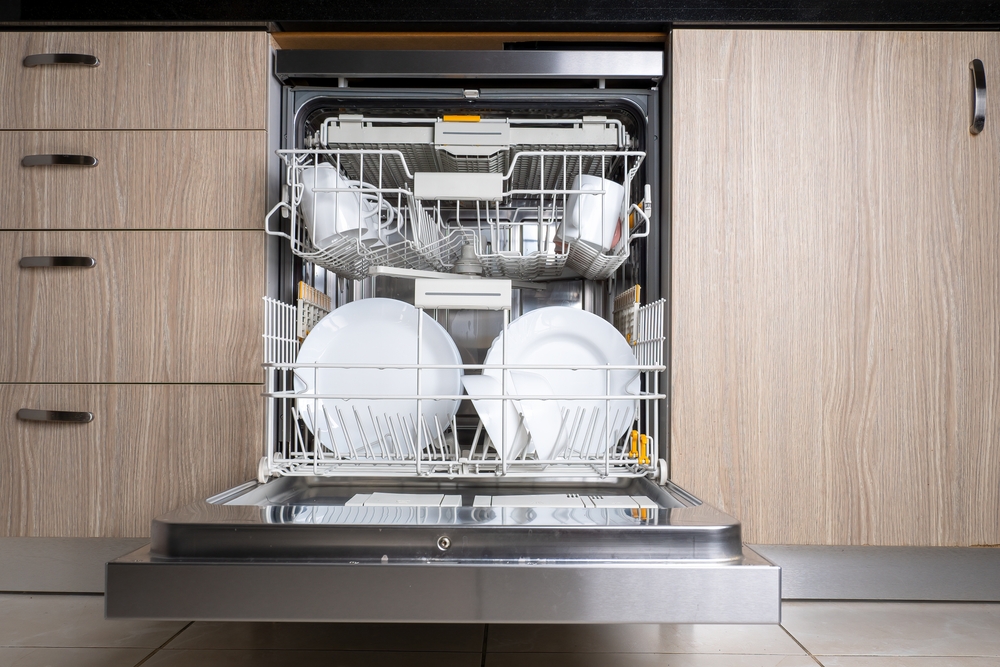
According to the InterNACHI® Home Inspection Standards of Practice, a home inspector is not required to inspect the dishwasher appliance during a home inspection.
For those inspectors who exceed the standards to provide that type of inspection, here's an inspection checklist for inspecting a dishwasher in the kitchen during a home inspection:
Interior
- Check the interior for personal items or storage. You're not required to move personal belongings. If the appliance is being used for storage, it's an inspection restriction. Dishwashers used for storage often indicate operational problems. If the dishwasher is brand-new, and it has manufacturer documents and parts in plastic bags inside the dishwasher, home inspectors may choose to not operate these units.
- Look for rust on interior surfaces or components. This indicates old age or other major problems.
Electrical
- Check the power supply to the appliance. If the dishwasher does not seem to be supplied with electricity, then it might be the GFCI (ground fault circuit interrupter).
- The dishwasher must be protected by a GFCI, a ground fault circuit interrupter. If the GFCI is tripped, reset it. If it immediately trips again, that indicates potential electrical problems with the appliance.
- Check for GFCI protection. Dishwashers require GFCI protection due to shock hazards in wet kitchen environments. Refer to 2024 IRC E3902.12. GFCI protection is required for all dishwashers regardless of whether the appliance is hardwired or cord-and-plug-connected, and this is accomplished by means of a GFCI-type circuit breaker or a GFCI receptacle device.
- Dishwashers are commonly fitted with a cord and plug and plugged into a receptacle mounted in the back of an adjacent kitchen sink base cabinet. The length of the flexible cord for the built-in dishwasher is at least 36 inches and a maximum of 78 inches. Refer to 2024 IRC E4101.3.
- Where a flexible cord passes through an opening, it should be protected against damage by a bushing, grommet or other approved means (like a smoothed edge). Refer to 2024 IRC E4101.3.
- The dishwasher must be protected by an AFCI, an arc fault circuit interrupter. AFCI protection is required for all 120V, 15- and 20-amp branch circuits in kitchens, which includes those supplying dishwashers. This is to prevent fires from arcing faults. A dual-function AFCI/GFCI breaker combines both AFCI and GFCI protection into a single device, simplifying the installation and ensuring compliance with code requirements. Refer to 2024 IRC E3902.21.
Water
- Every dishwasher needs water. If the water supply valve is turned off, this as an inspection limitation. Don't turn the valve on. It might be turned off because of a known major water leak problem, and you don't want to cause more problems.
- Run a significant amount of water at the kitchen sink, assuming that the dishwasher drain discharges into the same drain pipe. Running water will help confirm that the drain is free from blockage prior to operating the dishwasher. This is an important step particularly in new construction or kitchen renovations.
- Confirm the water supply connection is the hot water line. Dishwashers require hot water for proper cleaning performance. While quantitative temperature measurements exceed the Standards of Practice, inspectors may check the temperature of the appliance water with a laser thermometer. The industry standard is 120°F (49°C) minimum. Home inspectors don't measure water temperature or the heating element temperature. Instead, they observe how systems and components operate using normal operating controls.
Drainage
- Check the discharge line from the dishwasher and the drain pipe under kitchen sink. The discharge line from the dishwasher must connect to (a) a drain pipe (a wye branch fitting), (b) a food disposer, or (c) a standpipe with an air break. And the drain pipe should be secured to the underside of the countertop to prevent backup.
- If a standpipe is used for the dishwasher drain waste connection, the waste line must terminate through an air break and be secured to the top of the standpipe. The need to loop the dishwasher hose to the underside of the countertop is not needed for this waste connection because the standpipe is an indirect waste and the chance for backup into the dishwasher is unlikely (Refer to 2024 IRC P2717.2).
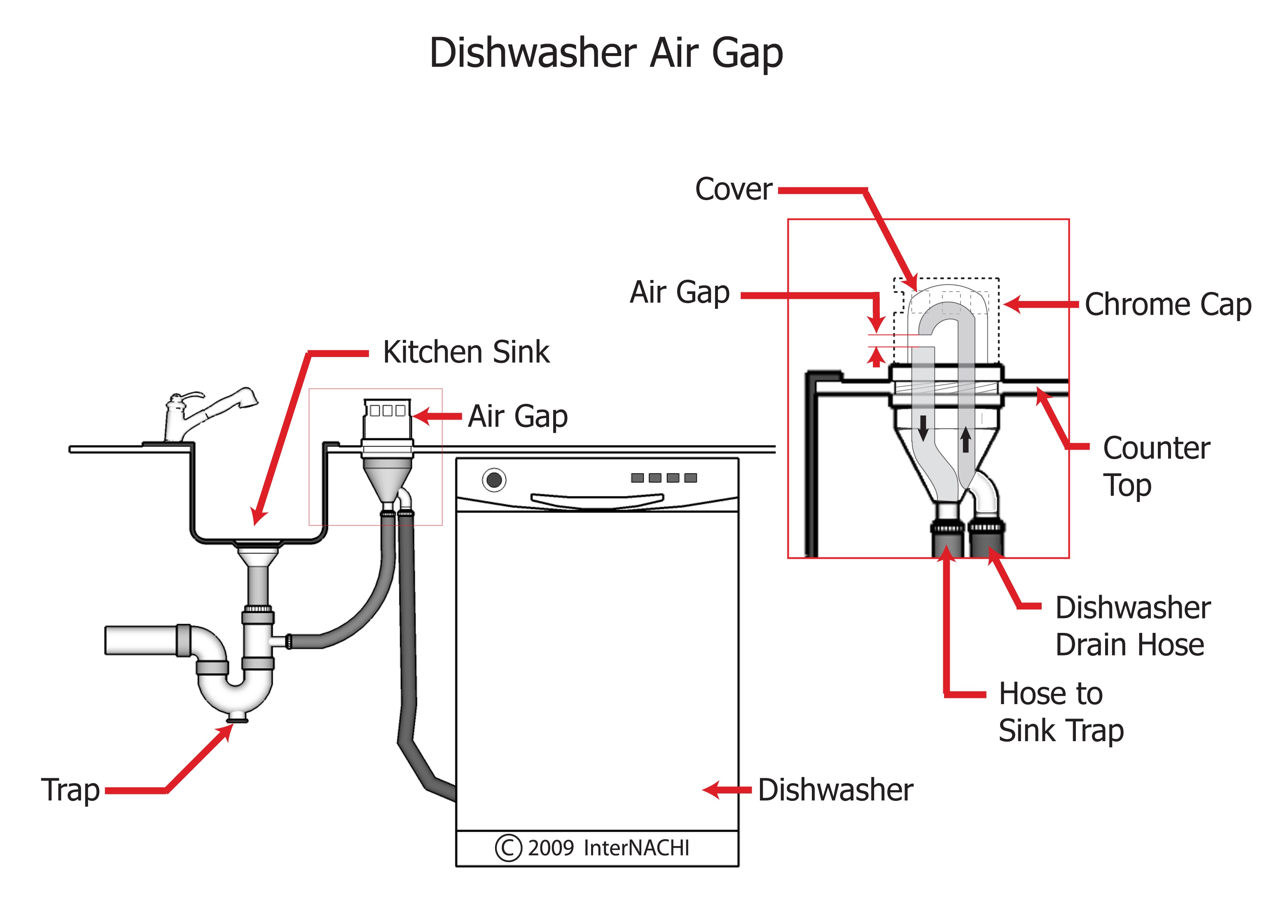
- Check the backflow prevention. There must be an air gap or high drain loop to prevent contaminated water from the dishwasher from entering the clean water supply of the house. There may be an airgap device mounted on sink or countertop or a high loop fastened as high as possible to the underside of the counter.
Exterior
- Check that the appliance is securely mounted. The unit shouldn't move when you open the door.
- Check the door gasket for damage, tears, warping, or buildup that prevents proper sealing of the door.
- Check for indications of prior water leaks at the floor area. Consider removing the kick plate to check under the dishwasher for various problems, including improper wiring, leaks, pests, and debris.
Components
- Check control panel and buttons. All should respond properly.
- Inspect dish racks for damage, broken tines, or poor rolling action.
- Check the rollers of the dish racks.
- Check the spray arms. Spin them. They should rotate freely and have clear holes.
- Check the soap dispenser door. It should open and close properly.
- Check the door springs and balance by holding the top firmly and opening the door. It should self-close within 20 degrees, stay positioned from 20-70 degrees, and possible open flat beyond 70 degrees.
- Check the dryer element.
- Check the door latch.
- Check the rinse cap.
Operation
- Check if the unit operates. Turn it on, select a short cycle. Non-functioning units are defects and must be reported. If you discover active leaks during operation, immediately turn off the unit and note the leak location for your report.
- Check for active water leaks while the unit is operating. Any water leak from the appliance is a defect. Immediately stop the cycle and set it to drain.
- The unit should drain completely. There shouldn't be any puddles of water inside the dishwasher. Check for proper drainage after running a short cycle.
Summary
Dishwashers that won't turn on, active water leaks, drainage problems, and missing backflow prevention are major defects that require correction by qualified contractors.
The home inspection report may include pictures and written notes about about indications of defects that were observed during the home inspection.
