Inspection Checklist for the Microwave Oven
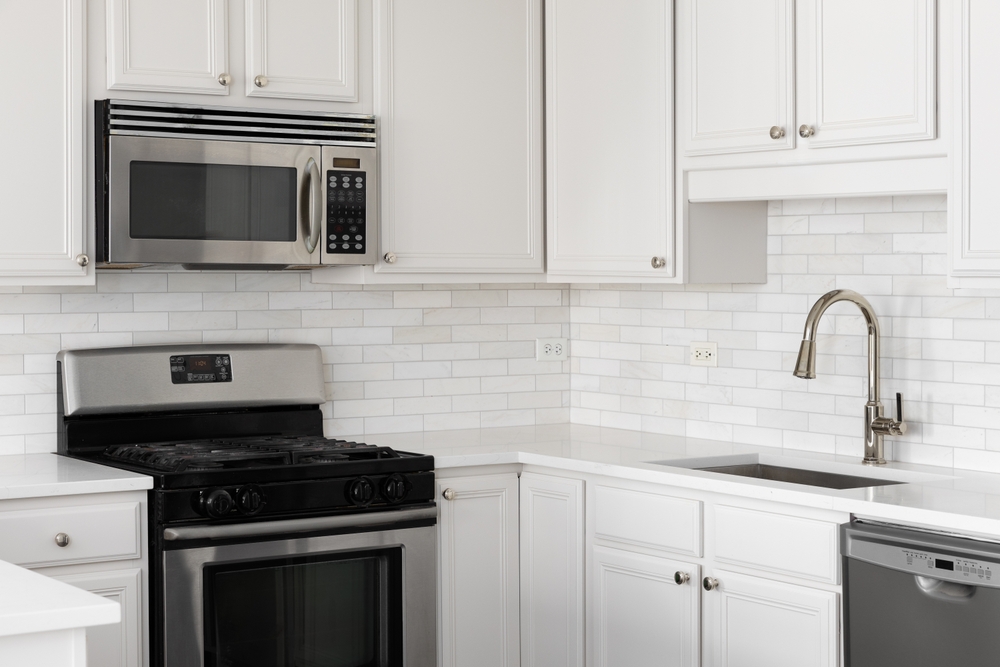
According to the Home Inspection Standards of Practice (nachi.org/sop), the home inspector is not required to inspect microwave ovens or test leakage from microwave ovens. For inspectors who exceed the standards to provide that type of inspection, here's a checklist. Exceed or not exceed?
OverSeeIt
A cooking appliance must be installed in accordance with the manufacturer’s instructions. To make sure an appliance is installed correctly, homeowners can hire inspectors through OverSeeIt.com.
Safety
- Check for secure mounting of the microwave oven. Units should be firmly attached to cabinetry or wall brackets and not move when the door is opened.
- Check for damage. Never operate a microwave with a damaged door or cracked glass. This poses a serious risk to radiation exposure.
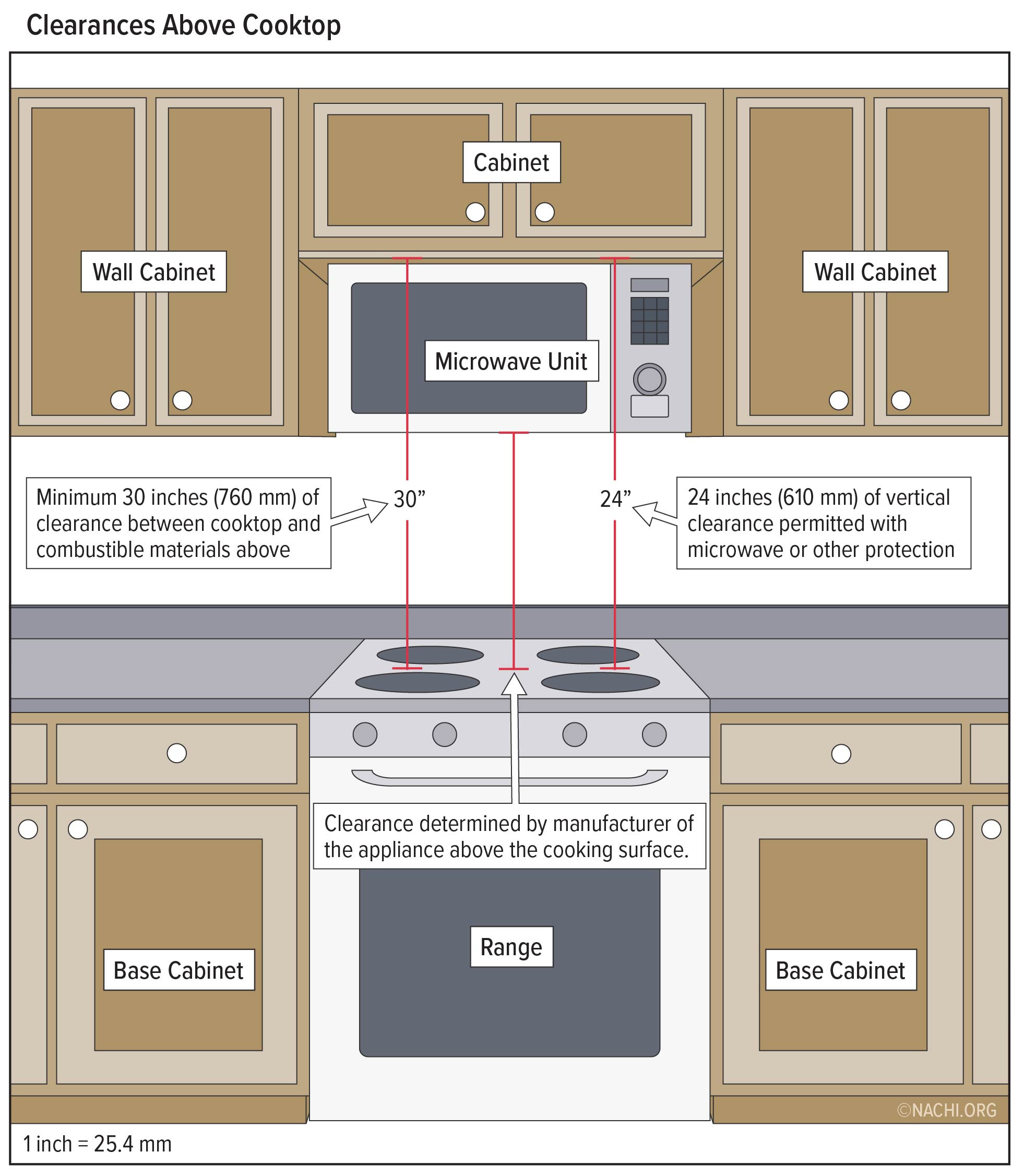
- Check vertical clearance to combustible materials. Cook tops can produce intense heat. Household cooking appliances should have at least 30 inches (760 mm) of vertical clearance above the cook top to unprotected combustible materials (cabinet, framing, soffit, shelving). There are exceptions that permit the minimum to be 24 inches (610 mm), including a microwave installed according to the manufacturer's installation instructions. Refer to 2024 IRC G2447.5 and IFGC 623.7.
- Check that the electrical receptacle in the cabinet above is properly positioned and the cord connection is secure. Refer to 2024 IRC R4101.3.
Electric
- Check the panelboard for a dedicated branch circuit for the microwave appliance in the kitchen. There could be a breaker labeled "Microwave," if the appliance is installed.
- A receptacle for a fixed-in-place microwave over the cooking appliance can not be served by the small-appliance branch circuits (the two 20-amp circuits for the kitchen counter receptacles of 2024 IRC E3901.3.1). The small-appliance circuits can not supply anything else, such as the exhaust hood fan over the range, except as allowed by the exceptions.
- Check for a cord-and-plug connection into a receptacle mounted in the rear wall of a cabinet above the range. Refer to 2024 IRC E3901.5.
GFCI
- The branch circuit that supplies the microwave must have GFCI (ground-fault circuit-interrupter) protection whether the appliance is hardwired or cord-and-plug connected. This is accomplished by the use of a GFCI breaker or a GFCI receptacle. Refer to 2024 IRC R3902.12.
- If the microwave does not seem to be supplied with electricity, then the GFCI might be tripped off. If the GFCI is tripped off, reset it. If it immediately trips again, that indicates a potential electrical problem with the appliance or GFCI device.
Exterior
- Examine the handle for proper attachment and smooth operation. The door should open and close the door without any problems.
- Inspect glass panel in the door for cracks, chips, or damage that could compromise safety.
- Check the door and door seal. The microwave door should close completely to prevent microwave leakage.
Controls
- Check the control panel, buttons, knobs, and display. The buttons and digital display should respond properly.
- Turn on the interior lights and check that lenses are clean and not cracked.
- Examine interior surfaces for damage, excessive food buildup, or arcing marks that indicate electrical problems.
- Check the turntable. It should rotate freely and sit properly on its support ring.
Operation
- Microwave energy will not leak from a microwave in good condition. A damaged microwave oven may present a risk of microwave energy leaks. To be safe, step away from the microwave while it is running to avoid exposure to non-ionizing electromagnetic radiation.
- Check the operation of the microwave oven by placing a small cup of water or wet paper towel inside the appliance and running a brief 5-second heating cycle. Check the operation, not the cooking performance or water temperature.
- Listen for the magnetron humming.
- Check the light inside the appliance turns on.
- Check the turntable rotation during operation.
- Use an EMF detector or InterNACHI's Microwave Detector to check for electromagnetic wave leakage around door. Follow the detector's instructions.
- The unit should immediately turn off when the door is opened.
- If the unit doesn't start, makes unusual grinding or arcing sounds, produces a burning smell, or shows no signs of heating after the brief test, that’s a defect.
Exhaust Fan
- Describe the type of fan installed. The exhaust fan can be external to the hood, integral with the hood, or integral with a cooking appliance (microwave) that mounts over the cooking appliance. A microwave oven over the cooking surface with an integral exhaust is common. Refer to 2024 IRC M1503.2.
- Check the exhaust fan over the cook top. Confirm that the fan exhausts outside. It's recommended that exhaust fans over the cook top discharge outside. There's an exception if natural or mechanical ventilation is provided for the kitchen, but this is not common. Refer to 2024 IRC 1503.3.
- The exhaust fan ducts should have smooth inner walls and be made of copper or rigid galvanized or stainless steel. Flexible and semirigid corrugated ducts for range hood exhaust are not permitted. The exhaust must not discharge to an attic, crawl space, or ridge, soffit, gable or roof vent. The duct must be independent of all other ducts. It must be sealed airtight to prevent leaking air and grease into the wall cavity. A backdraft damper should be installed at the termination. Refer to 2024 IRC M1501.1.
- For more detailed training on inspecting mechanical exhaust fans, visit nachi.org/inspection-mechanical-exhaust-fan.
Summary
Door damage, arcing, and EMF leakage are major defects that require correction by qualified contractors.
The home inspection report may include pictures and written notes about about indications of defects that were observed during the home inspection.
