Home Heating Oil Tanks
by Nick Gromicko, CMI®
 underground, in basements, or above ground outside of the house. Heating oil is safe when stored and used appropriately, but accidental spills and undetected leaks can endanger health, property and the environment. Inspectors and their clients should be aware of some of the hazards of a leaking or damaged above-ground oil tank.
Oil leaks and spills can happen at a residential property for a number of reasons, such as when a storage tank develops a leak or is damaged or overfilled, or if oil is accidentally filled into a septic tank or into fuel lines that are no longer attached to the tank. A spill might even happen on a nearby property and the oil may flow into a neighbor's yard. Regardless of its cause, cleaning up an oil spill is extremely expensive, often costing hundreds of thousands of dollars or more, and putting homeowners in danger of bankruptcy.
How toxic is home heating oil?
Heating oil is also an environmental pollutant that can poison soil, groundwater, and wildlife and their habitats. It has a relatively low toxicity to humans –- less than that of gasoline, for instance -– although it can harm people through the following methods of exposure:
- inhalation of vapors:
- Short-term exposure to heating oil fumes can cause headaches, nausea, increased blood pressure, dizziness, difficulty concentrating, and irritation to the eyes, nose and throat.
- Long-term exposure to heating oil fumes, often due to undetected leaks, can cause liver and kidney damage, diminished ability to smell and taste, and other serious health problems. Heating oil is not currently known to cause cancer, although one of its constituents -– benzene –- is carcinogenic.
- skin contact, which can lead to itchiness, redness, pain, blisters and peeling; and
- ingestion, which can cause vomiting, diarrhea, restlessness and breathing difficulties. In large enough quantities, ingestion can lead to coma or death.
Signs of a Possible Leak
- drips or any signs of leaks around the tank, filter, fuel-delivery line, valves, piping or fittings;
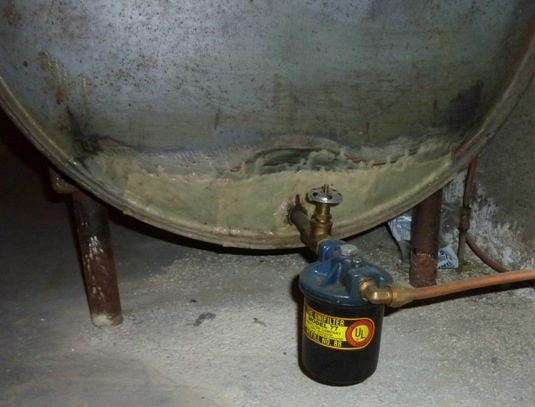
- signs that the tank has been patched to temporarily conceal a leak (depicted in the photo below);
- rusty, loose, wobbly or bent tank legs, or a cracked foundation, which can indicate poor tank stability. A full 275-gallon heating oil tank weighs more than 2,000 pounds, so it needs strong legs and a sturdy foundation;
- poor condition of oil tank lines. Check these periodically and contact the oil supplier if they look questionable. Keep the vent line clear of any snow, ice and insect nests;
- dying vegetation surrounding an outdoor tank. An oil leak may be the cause of damaged or dying plants or grass nearby;
- wet spots or rust on the tank’s outer surface;
- old fuel-fill lines are no longer connected to the tank in use. If these lines are inadvertently filled, a massive oil leak will result. Unused/unconnected fuel lines from replaced oil tanks should be removed;
- overhanging eaves that may allow ice or snow to fall onto the tank and melt, potentially corroding the tank;
- fuel lines that are not covered by protective casing, even if the tank is underground;
- oil stains on the ground or a strong odor of oil around the tank;
- a cracked, stuck or frozen fuel-level gauge, or signs of fuel around the gauge;
- a clogged or restricted tank vent blocked by snow, ice or insect nests; or
- signs of an oil spill around the fill pipe or vent pipe.
- Act immediately. Even after the source of the leak is stopped, the leaked oil will saturate surrounding soil, flow into cracks and drains, and get beneath floors and walls and remain there until it is cleaned up.
- Turn off all sources of flames or sparks in the area, such as pilot lights in water heaters and furnaces. Unplug any sparking mechanisms. Do not smoke or light matches in the area. While heating oil is less flammable than gasoline, it is still possible for it to ignite.
- Ventilate the area. Clothes and furniture will absorb the oil smell and may need to be discarded. Open windows and close cold-air returns, heat registers and other openings that may allow fumes to enter other areas of the home. Make every effort to seal off any air flow between the spill and the inhabited areas of the home.
- Be sure to keep pets away from any contaminated area.
Clean up small spills by donning rubber gloves and old shoes and clothes that can be thrown away afterward. Avoid skin contact and inhalation of fumes. Larger spills will require professional cleanup.

