Roof-to-Roof Flashing
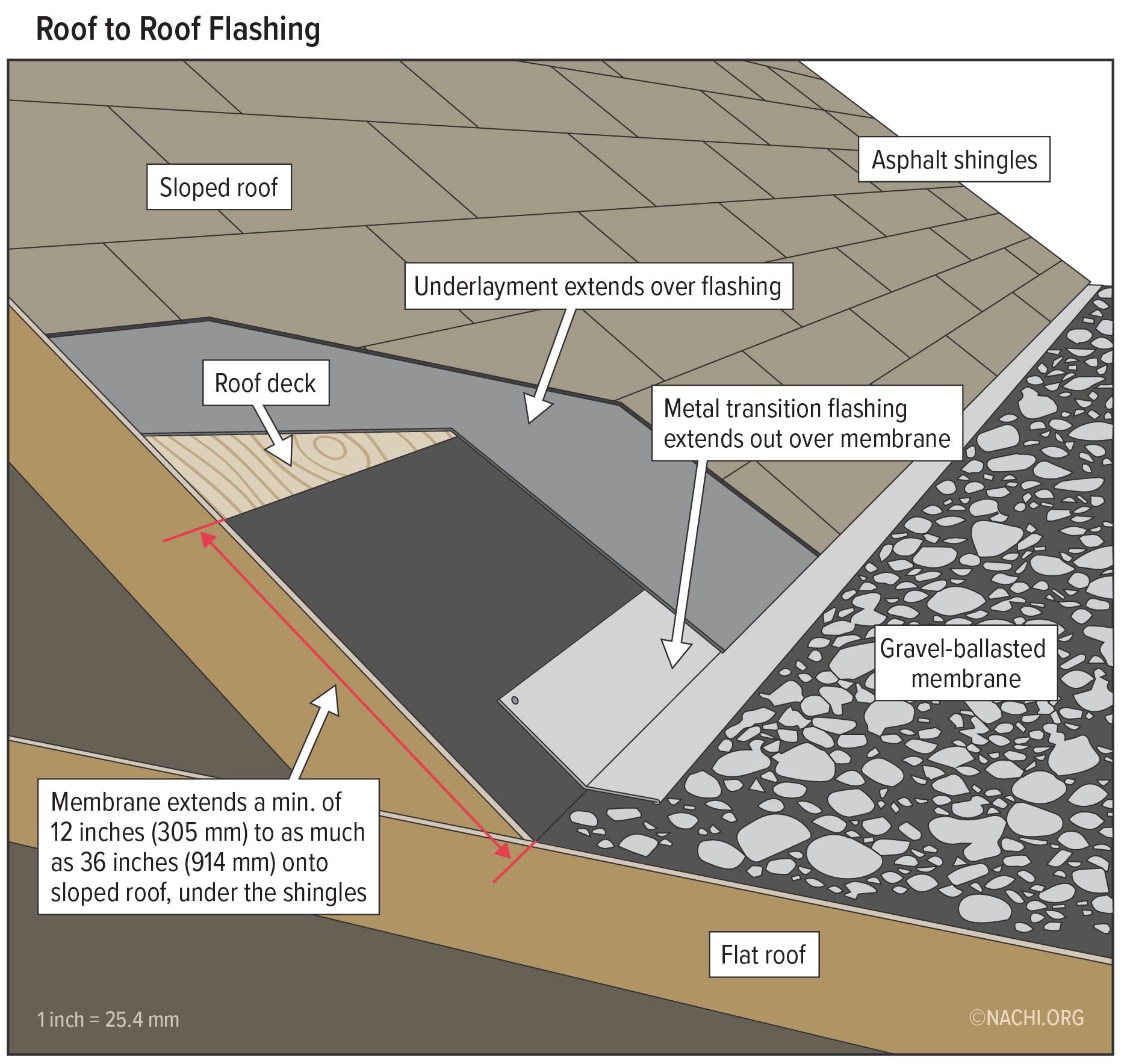
It is common to see changes in roof slope, especially where the house has an addition and
the roof plane transitions from a conventional slope to a low slope. In many cases, two roof
planes are covered with different styles of roof covering. For example, regular shingles on a
steep slope will transition to roll roofing on a flat roof.
In most cases, the material of the lower-slope roof should be extended at least 12 inches up
under the covering of the conventional-slope roof. In some areas, particularly those with high
snow loads, it is better if the lower-slope covering is extended as much as 3 feet up the
conventional plane. Even in cases where the same roofing material is continued down both
planes, there should be additional protection underneath the roof covering at the junction. At a
minimum, an inspector should see an extra layer of roofing felt or an impermeable membrane.
License
All images copyright © 2008-2026 the International Association of Certified Home Inspectors, Inc. (InterNACHI). All rights reserved. InterNACHI grants its members a non-exclusive, non-transferable worldwide license, as long as they remain a member of InterNACHI. Non-members must obtain written or email permission from InterNACHI before using these images for any purpose. If you are an InterNACHI member or have received written or email permission to use this image, you may download it in high resolution.
If you are aware of any person or entity using any InterNACHI image or intellectual property without authorization, please contact InterNACHI.
