Inspection Checklist for Electric and Gas Range, Cooktop, and Oven
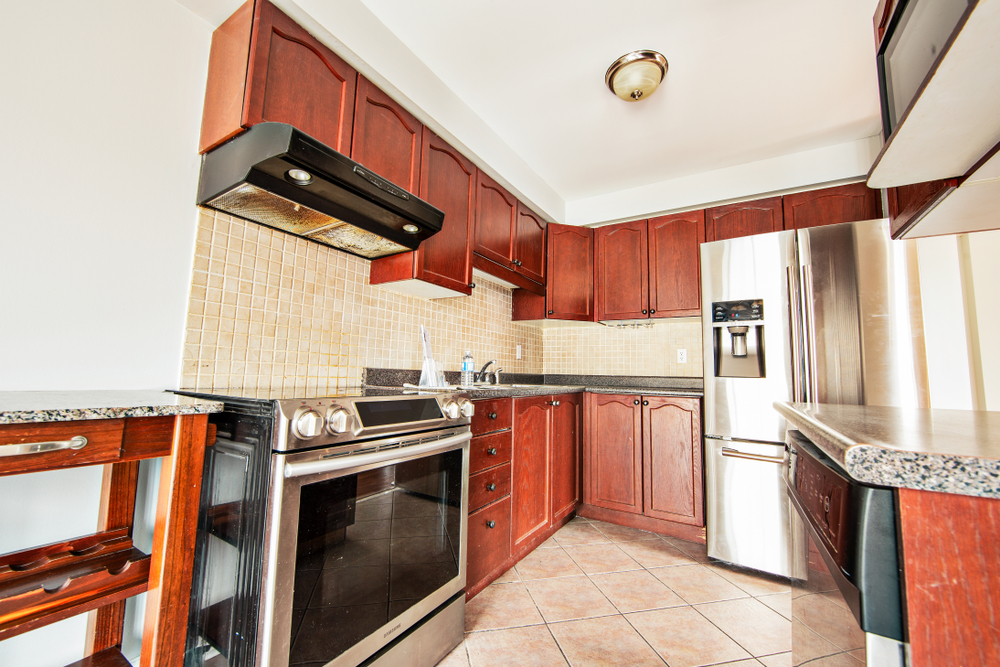
According to the Home Inspection Standards of Practice (nachi.org/sop), the home inspector is not required to inspect the kitchen appliances. For inspectors who exceed the standards to provide that type of inspection, here's a checklist to inspect the electric and gas range, cooktop, and oven.
OverSeeIt
A cooking appliance must be installed in accordance with the manufacturer’s instructions. To make sure an appliance is installed correctly, homeowners can hire inspectors through OverSeeIt.com.
Safety
- Check for secure mounting. The ranges should be level and stable.
- Verify an anti-tip device is installed and functioning. This device prevents the unit from tipping forward when opened or weight is applied. This is a critical safety check.
- Smoke alarms should be installed at least 10 feet (3048 mm) horizontally from a cooking appliance. Refer to 2024 IRC R310.3.1.
- Document any component that doesn't meet safety or operational standards.
Operation
- Check the interior for personal items or storage. Inspectors are not required to move personal belongings. If the appliance is being used for storage, it's an inspection restriction and may indicate operational problems. If the appliance is brand new, manufacturer documents and parts may be inside the oven.
Electricity
- Check the power supply to the gas range. An electric receptacle should be installed at or near the appliance location. A 120-volt receptacle outlet is needed to power items on the range such as timers, lights, fans, electronic controls and ignition systems. This receptacle can be connected to one of the small-appliance branch circuits. Refer 2024 International Fuel Gas Code (IFGC) Section 306.5.2. Refer to 2024 IRC E3901.3.1 and NEC 210.52(B)(2) Exception No. 2.
- Check the power supply to the electric range. A dedicated 240-volt branch circuit outlet (minimum 40 amperes) must be installed within 3 feet (914 mm) of the electric range appliance. There is a code-compliant exception for low kW electric ranges connected to a 30 amp circuit. NEC (210.19(A)(3)).
- It’s common to find a double-pole 50-ampere breaker at the panelboard connected to a 6-3 wire labeled "Range."
- Modern ranges will have a 4-wire cord plugged into a 4-prong outlet located behind the appliance. Refer to 2024 IRC 3702.10.1.
- Some models may have the plug accessible from the front by removing the drawer. Refer to NEC 422.33(B).
Fuel Gas
- Visually locate the gas shut-off valve. It must be located in the kitchen, within 6 feet (1829 mm) of the appliance, and installed upstream of the union, connector or quick disconnect device it serves. The valve is considered accessible if installed behind the moveable appliance. Refer to 2024 IRC G2420.5.
A yellow coated stainless steel gas appliance connector may be visible behind the unit. Appliance fuel connectors must be installed in accordance with the manufacturer’s instructions.
- Check gas connector materials and connections.
- A gas leak detector could be used to check for gas leaks at accessible pipe connections.
- Connectors should not exceed 6 feet (1829 mm) in length. Refer to 2024 IRC G2422.1.2.1.
GFCI
- Check GFCI-protection for an electric range at the panelboard. The appliance must be protected by a GFCI, a ground fault circuit interrupter. Ground-fault circuit-interrupter (GFCI) protection must be provided for the branch circuit or outlet supplying an electric cooking range rated 150 volts or less to ground and 60 amperes or less. Refer to 2024 IRC R3902.12.
- If the range does not seem to be supplied with electricity, then it might be at tripped GFCI (ground fault circuit interrupter). If the GFCI is tripped, reset it. If it immediately trips again, that indicates potential electrical problems with the appliance.
AFCI
Arc-fault circuit-interrupter (AFCI) protection should be provided for the branch circuits supplying 120-volt, single-phase, 10-, 15-, and 20-amp outlets in kitchens. The electric range is excluded from this requirement. Refer to 2024 IRC E3902.21.
Operation
- Check the control panel, including the knobs, buttons, and displays.
- Check the exterior of the appliance. Look for major damage at the door, including the oven door handle.
- Inspect the glass panels in oven doors for cracks or damage.
- Check the door operation, including gaskets, hinges, springs, and handle. The door should close properly and seal correctly.
- Check the door latch mechanism operates smoothly.
- Check the drip pans under the burners and oven elements for damage or excessive buildup.
- Check the appliance interior. Look for scorching, damage, missing racks, and excessive grease.
- Turn on oven lights and check that lenses are intact.
- Check thermostat sensor support brackets for secure mounting and check for damage at the sensors.
- Turn on the overhead exhaust fan.
- Turn on all heating elements or burners of the appliance using normal operating controls.
- Test thermostat accuracy by setting oven to 250°F and using an oven thermometer or measurement device. Readings should be within 20 degrees.
- Do not leave the appliance on unattended.
- Turn off the appliance.
Exhaust Fan
- Inspect the exhaust fan installed over the cooktop. An absent exhaust system can affect the space conditioning and indoor air quality of a house.
- Describe the type of fan installed. The exhaust fan can be external to the hood, integral with the hood, or integral with a cooking appliance (microwave) that mounts over the cooking appliance. A microwave oven over the cooking surface with an integral exhaust that does terminate outside is common. Refer to 2024 IRC 1503.2.
- Check vertical clearance to combustible materials. Cook tops can produce intense heat. Household cooking appliances should have at least 30 inches (760 mm) of vertical clearance above the cooking top to combustible materials (framing, finishes, cabinets, shelving, soffit) and metal cabinets with combustible contents. A few exceptions permit a minimum clearance of 24 inches (610 mm), including when the underside of the combustible material or metal cabinet above the cooking top is protected by a microwave oven installed in compliance with the manufacturer's installation instructions. Refer to 2024 IRC G2447.5 (IFGC 623.7).

Exhaust
- Check if the exhaust fan over the cooktop is installed to recirculate or exhaust outside. The air removed by a mechanical exhaust system (bathroom fan, a clothes dryer, and kitchen exhaust fan), should to terminate outside. Confirm that the fan exhausts outside. The air should not discharge into an attic, soffit, ridge vent, or crawl space. There's an exception if natural or mechanical ventilation is provided for the kitchen, but this is not common. Refer to 2024 IRC 1503.3.
For more detailed training on inspecting mechanical exhaust fans, visit nachi.org/inspection-mechanical-exhaust-fan.
Ducts
- Check the ducts of the exhaust fan. Ducts used for domestic kitchen exhaust fans must be constructed of noncombustible materials to reduce the potential fire hazard associated with the collection or absorption of grease. The duct must be made of galvanized steel, stainless steel, or copper. There's exception for cooking appliances with down-draft exhaust systems made of schedule 40 PVC pipe that are installed in an underfloor trench under a concrete slab. Refer to 2024 IRC M1503.4.
Exhaust Rates
- Check the exhaust fan is moving air. There should be noticeable suction. A home inspector may simply use their hand or a paper towel near the intake to check for air movement and suction. For the kitchen, the minimum exhaust rate is 100 cfm intermittent fans and 25 cfm for continuous fans. Continuous exhaust fans provide some over-ventilation. Intermittent fans run for short periods of time, requiring a higher rate to control odors, cooking effluent, and moisture. Refer to 2024 IRC M1503.5 and M1505.5.
Summary
The home inspection report may include pictures and written notes about about indications of defects that were observed during the home inspection.
Gas leaks, missing anti-tip devices, and inoperative features are major defects that require correction by qualified contractors. Do not ignore gas odors or unstable units.
