Solar Heat-Gain Coefficient Ratings for Windows
The amount of solar radiation that can pass through a window or skylight can be measured in terms of its solar heat-gain coefficient, or SHGC. SHGC ratings are used to help in quantifying the energy efficiency of windows and skylights. Understanding some of the specifics about SHGC ratings can be helpful to energy-conscious consumers who are planning a new build or renovating their home. Inspectors may find that knowing something about SHGC ratings can be useful for energy audits.
Why Use SHGC Ratings?
By knowing how a window behaves in relation to sunlight and solar heat, the most appropriate windows can be chosen for a specific installation on a home, which often depends on the climate of the region where the home is located. For example, windows that allow a larger amount of solar heat to pass through are best utilized in hea ting-dominated climates where extra warmth from sunlight can be beneficial.
SHGC is best described as a ratio where 1 equals the maximum amount of solar heat allowed through a window, and 0 equals the least amount possible allowed through. An SHGC rating of 0.30 means that 30% of the available solar heat can pass through the window. The SHGC rating assigned to a window generally includes the entire window assembly, and is meant to help quantify the energy efficiency of the combination of the glazing, window frame and any spacers (which separate the glazing panels). So, the type of window, as well as the glass, affect the SHGC rating.
When windows are rated for energy efficiency, the rate of non-solar heat that passes through is quantified as the U-factor, as opposed to SHGC, which quantifies the rate of solar heat that passes through the window. SHGC and U-factor ratings are specific to windows and measure properties different from insulation R-values, which are used to quantify the insulating capabilities of building materials used elsewhere in a house, such as insulation behind walls, under floors, in an attic, etc. These different values are each designed to measure very specific properties, which is helpful when examining the individual factors that can all be addressed to improve the energy efficiency of a whole house.
How are SHGC Ratings Determined?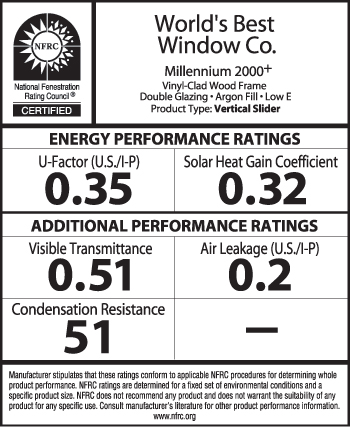
SHGC ratings are documented on labels affixed to products that are part of the NFRC's certification program. Also noted on the label are the window’s U-factor, air leakage characteristics, visible transmittance, and condensation resistance. These factors add up to determine a window’s overall energy performance. The labels provided by the NFRC help guide consumers in purchasing windows that are best suited to specific applications and installations.
Solar Heat-Gain Coefficient in Different Climates
Although windows and skylights with a low SHGC can sometimes be used effectively in heating-dominated climates that also experience some hot months, they are much more effective and important in cooling-dominated regions.
The following are some recommendations for the best window and skylight choices based on SHGC and the region of the U.S. they will be used in.
- In colder, heating-dominated northern climates, SHGC is less important than a window’s U-factor, which can still be taken into account for energy efficiency. When air conditioning is generally not of concern, a higher SHGC in the range of 0.30 to 0.60 can be helpful, since during winter months, the solar heat gained can help warm the house. If air conditioning is sometimes used and cooling is a concern, windows and skylights with an SHGC of less than 0.40 should be used.
- In the mixed climates of the North and Midwest, where both heating and cooling are used but cooling is used less often, windows and skylights with an SHGC of less than 0.40 are best. In situations where air-conditioning costs during warm months can be
 come high, windows with an SHGC of less than 0.30 can be beneficial. While lower SHGC windows can help to keep homes and its occupants cooler during the summer, they also allow less gain from solar heat during cold months, so costs for heating versus air conditioning can be compared in these regions to help determine whether less or more solar heat gain will be most effective.
 - In the mixed-climate South and central regions that use both heating and cooling, SHGC for windows and skylights is best kept under 0.30, though, again, in areas where heating may be used extensively for some periods of the year, a lower SHGC equates to less warmth gained by solar heat. Cooling and heating costs can be compared to determine the best window choices.
- Using windows and skylights with a low SHGC is most beneficial in southern climates that are cooling-dominated, since the main concern in these regions is keeping interiors cool during long periods of the year of hot weather, while maintaining reasonable air-conditioning costs. These areas can most effectively utilize windows with an SHGC of less than 0.27, and skylights of less than 0.30.

